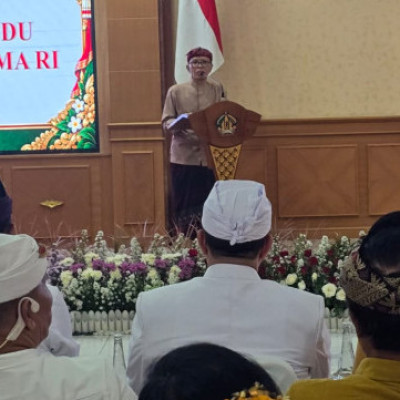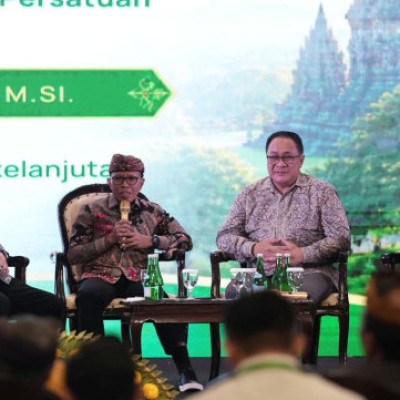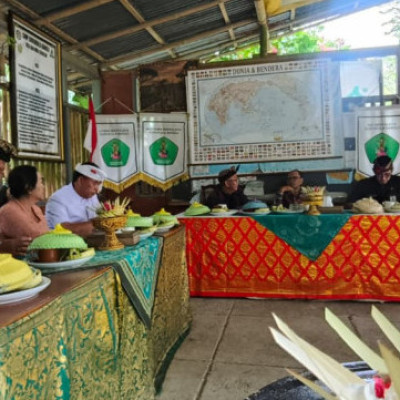

Om Swastyastu. Om Awighnamastu Namo Sidham. Om Anobadrah Kratavo Yantu Visvatah. May pure thoughts come from all directions.
My respected fellow Hindus, let’s deliver our offer puja (prayer) to Ida Sang Hyang Widhi Wasa, acknowledging that through divine blessings, health and safety have been preserved, even during the Covid-19 pandemic. Prostrations are also offered to the Sages who received the revelation of the Vedas, enabling Hindus to practice these sacred teachings in contemporary life.
My dear fellow Hindus, this year’s Pelita Dharma of the Directorate General for Hindu Community, Ministry of Religious Affairs, carries the theme “Creating Resilient Person in Facing Problems.” In life, we are never free from challenges. This is natural, for we are only human and bound to make mistakes. A Javanese proverb says: “Ora ono urip tanpo sandungan, ora ono masalah tanpo pungkasan” (There is no life without stumbling, no problem without resolution). In other words, every trial comes with a solution.
When we trip, don’t blame the rock that ripped us, but blame ourselves for not being careful. In life, we will inevitably encounter difficulties. Then, how should we face them? And does Hinduism provide guidance for this?
Hindu teachings encourage us to adopt a mindset of self-reflection and accountability. First, acknowledge problems without blaming external factors. Second, practice patience and seek wisdom from spiritual texts or elders. Third, strengthen resilience through regular prayer and meditation. By following these steps, Hindus can respond to challenges with balance and strength.
In Hindu teachings, humans generally face three major challenges, as explained in the Sarasamuccaya 474:
Arthaamsca durlabham loke, klesamsca sulabham statha, duhkham caiva kutumbaartham, yah pasyati sa mucyate.
This verse highlights three key struggles in life: the difficulty of obtaining wealth (artha) honestly, the ease with which problems (klesa) arise, and the difficulty of maintaining family and brotherhood in harmony (kutumbha). There are three key struggles in life:
First, Durlabhaning Artha – the difficulty of obtaining legitimate wealth. The pandemic weakened the economy, and many workers lost their jobs. Thus, Hinduism teaches us to live according to function rather than prestige. Importantly, there are three prohibited ways of gaining wealth: Anyaya Artha (through violence), Apariklesa Artha (through embezzlement), and Artha saking kasembahing satru (through bribery).
Second, Sulabaning Klesa – problems that easily arise and stain your life. According to the Taittiriya Upanishad, there are five sources of suffering known as Panca Klesa: Avidya (ignorance, the darkness of the heart which called by Sapta Timira), Asmita (egotism), Raga (desire), Dvesa (hatred), and Abhinivesa (constant fear). These afflictions often surface, leading to life’s difficulties.
Third, Duhkaning Mangraksa Kutumba – the difficulty of maintaining family harmony. While short-term intimacy is easy to build, lasting harmony is much harder. The proverb “There is no glory without brotherhood” reminds us that true greatness requires respect, tolerance, and strong bonds of kinship.
Every individual face challenges differently. For some, problems bring despair and loss of confidence. For others, challenges strengthen resilience and maturity. When problems arise, no one else can solve them for us. Silence does not end them. Instead, Hindu teachings encourage three approaches: pray, identify the root cause, and cultivate gratitude.
Pray. At times, we may feel as though God favours others, questioning why friends seem fortunate while our own lives are filled with trials. Yet, these challenges are reminders from God, guiding us to draw closer to Him. As the teaching goes: “Do not pray for fewer problems, but pray for greater strength and patience to endure them.”
Find the root of the problem. Hinduism teaches the law of karma: what we sow, we shall reap. Every problem has a cause. If we have erred, we must acknowledge it and seek forgiveness. Once the root is identified, the path to resolution becomes clearer.
Be grateful. Gratitude transforms perspective. Even difficulties can reveal hidden blessings. For instance, unemployment may provide time to bond with family. Gratitude fosters positive energy, helping us face challenges with optimism.
Ultimately, problems are part of life. They remind us of our dependence on God. Avoiding or denying them only weakens us. Facing them with faith brings us closer to Him. As the Javanese saying teaches: Suro diro joyo ningrat, lebur dening pangastuti. May harmony blesses all beings. Om Santih, Santih, Santih Om.
@M.Mahmud_Alhushori (Penerjemah)
Becoming A Resilient Person In Facing Problems