
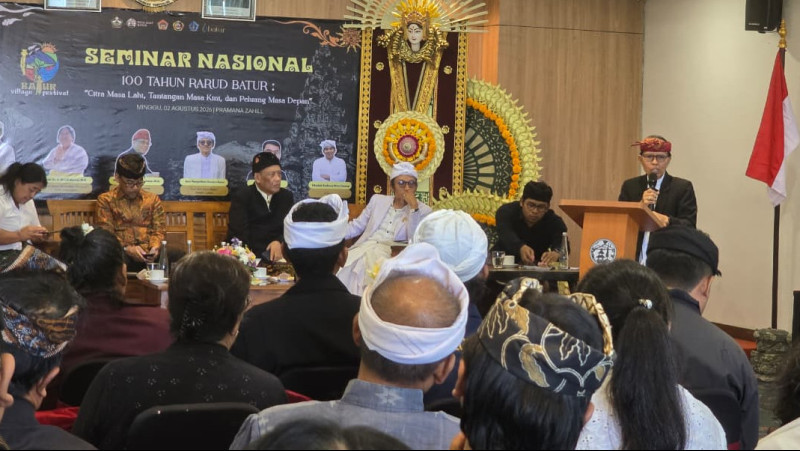
A century after the relocation of Batur Village following the 1926 eruption of Mount Batur, the people of Batur gathered to reflect on the historical journey that has shaped their social, cultural, and spiritual resilience. The centennial serves as a reminder that the continuity of a civilization is determined not merely by its geographical location, but by the values, beliefs, and collective spirit of the people who preserve it.
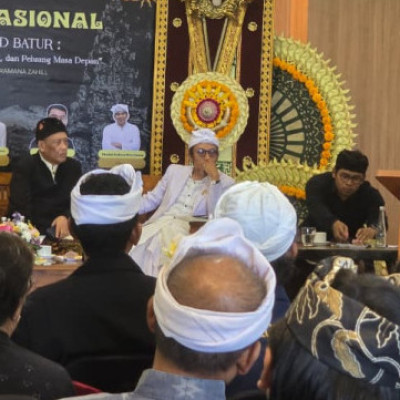
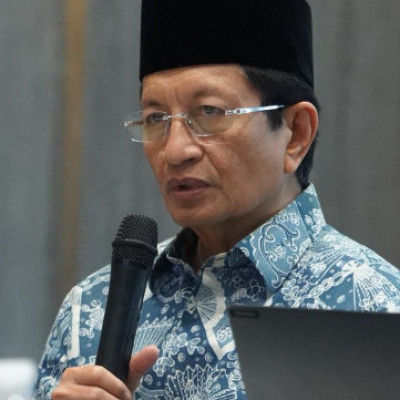
This message was delivered by the Director General of Hindu Community Guidance at the Ministry of Religious Affairs, Prof. I Nengah Duija, who served as the keynote speaker at the 100th Anniversary Reflection on the Relocation of Batur Village (1926–2026) held at Pramana Zahill, Batur, Kintamani, Bali, on Sunday (August 2, 2026).
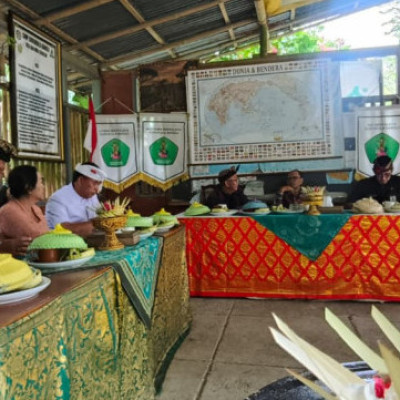
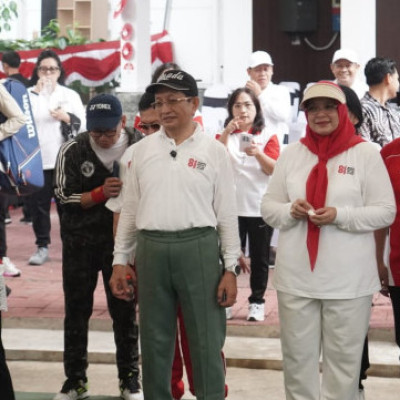
The event was attended by approximately 100 participants representing a wide range of stakeholders, including students from Udayana University, Terbuka University, the State Hindu University, students of SMA Negeri 1 Kintamani, traditional village leaders (Bendesa Adat), Kelihan Tempek Pengayah Batur, Hindu organizations such as Puskor Hindunesia, KMHDI, Peradah, PC FKPPI, Hindu educational foundations, and members of the wider community.
The reflection forum provided an intergenerational platform to revisit the historical significance of the relocation of Batur Village while reinforcing a shared commitment to preserving the cultural heritage, customary traditions, and spiritual values of the Batur community amid the challenges of a changing era.
In his presentation, Prof. Duija explained that the relocation of Batur Village following the eruption of Mount Batur in 1926 was far more than the physical movement of a community displaced by a natural disaster. Rather, it marked a profound transformation through which the community preserved its identity and rebuilt its religious and social life.
“The relocation of Batur Village demonstrates that the strength of a civilization lies not only in its geographical setting but in the values that are inherited and safeguarded by its people. The community’s determination to preserve its customs, religion, and culture became the foundation that enabled Batur to recover and continue its historical journey,” Prof. Duija said.
He explained that the eruption of Mount Batur in August 1926 devastated the original Batur settlement located at the foot of the volcano, forcing residents to relocate to a new area within the caldera. Despite the relocation, the community maintained a strong connection to its historical roots and spiritual heritage.
One of the most significant aspects of that journey, Prof. Duija noted, was the successful preservation of the community’s sacred pratima (holy religious heirlooms), which symbolized the continuity of Hindu religious values. This demonstrated that religious teachings became a source of inner strength, enabling the community to endure hardship while rebuilding life after the disaster.
The post-relocation period also gave rise to two important centers of spiritual life: Pura Jati, which represents the community’s ancestral origins and collective memory, and Pura Ulun Danu Batur, which gradually developed into a new spiritual center.
According to Prof. Duija, the continued significance of these two temples reflects the Hindu community’s ability to preserve its traditions while adapting to changing circumstances.
Beyond its spiritual significance, he also highlighted the close historical relationship between the people of Batur and the neighboring village of Bayung Gede, describing it as a lasting example of solidarity within Balinese society. During the displacement, the people of Bayung Gede welcomed the Batur community and helped safeguard both the displaced residents and their sacred pratima.
“The relationship between Batur and Bayung Gede demonstrates that fraternity, compassion, and mutual cooperation are invaluable strengths in overcoming life's challenges. These values must continue to be passed on to future generations,” he said.
Prof. Duija further emphasized that the Batur area holds strategic importance not only as a center of Hindu religious life but also as an ecologically significant landscape that supports the well-being of the Balinese people.
He explained that Mount Batur and Lake Batur embody the Hindu cosmological principle of Tri Hita Karana—the harmonious relationship between humanity and God, among fellow human beings, and between humanity and nature. Lake Batur also plays a vital role as a source of life, sustaining Bali’s traditional agricultural system.
As Batur commemorates one hundred years since its relocation, Prof. Duija encouraged younger generations to face the challenges of modernization, tourism development, and economic progress without losing their cultural identity.
“Young Hindus must regard history as a source of wisdom for building the future. Progress should never sever our cultural and spiritual roots. The preservation of our traditions, religion, environment, and the values of Dharma must advance hand in hand with development,” he emphasized.
Through the 100th Anniversary Reflection on the Relocation of Batur Village, it is hoped that the historical legacy and local wisdom of the Batur community will continue to be understood, preserved, and serve as an inspiration for building a society that is culturally rooted, resilient, and sustainable.
Editor : I Made Juni Saputra
Photographer : I Gede Dipayana