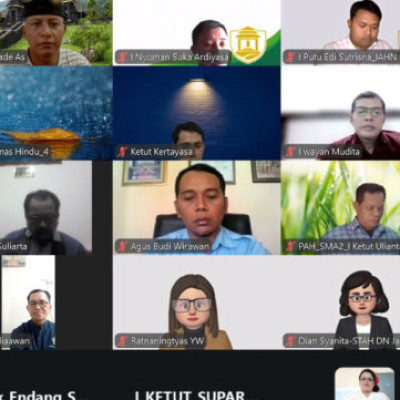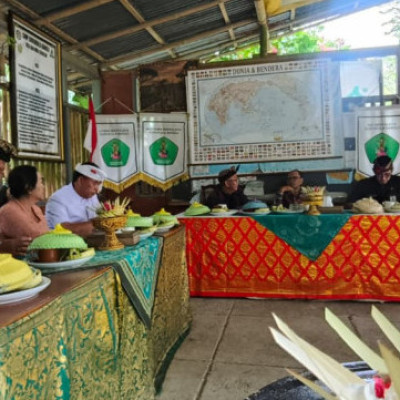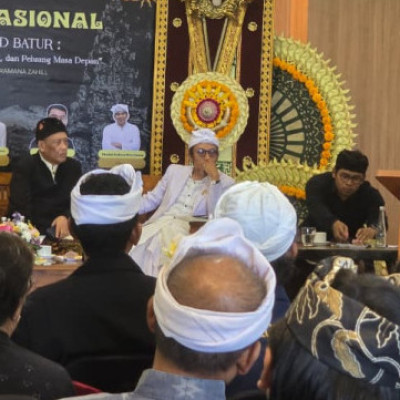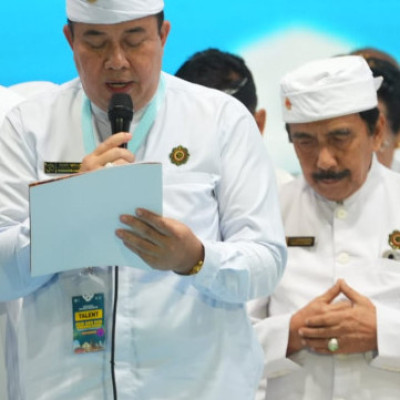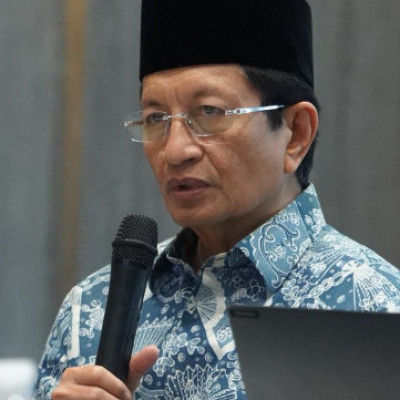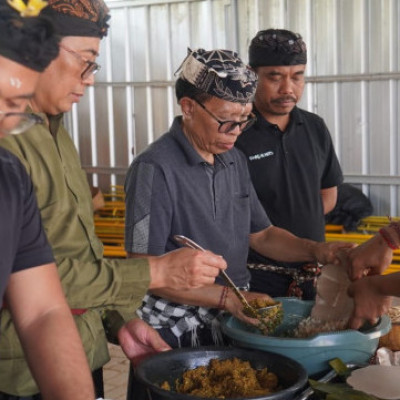

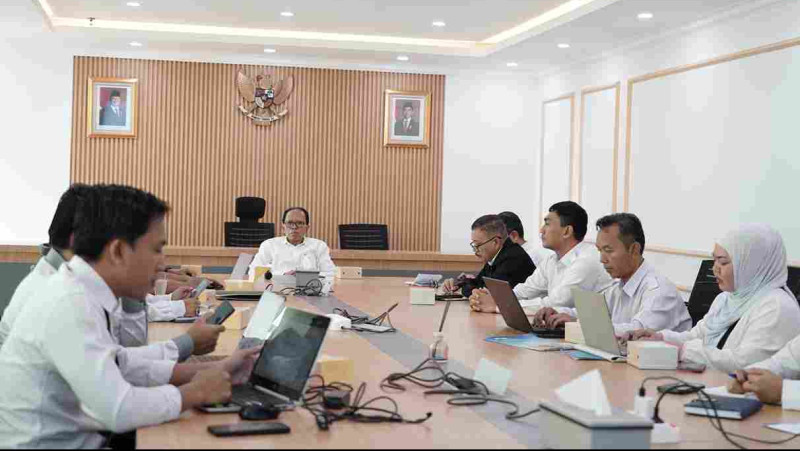
The Directorate General of Hindu Community Guidance at the Ministry of Religious Affairs, in collaboration with the Religious Moderation and Human Resource Development Agency (BMBPSDM) of the Ministry of Religious Affairs, strengthened coordination for the implementation of the 2026 Religious Devotion Index (Indeks Kesalehan Umat Beragama / IKsUB) through an audience meeting and technical discussion held at the Directorate General of Hindu Community Guidance’s meeting room on the 14th floor of the Thamrin Office, Jakarta, on Tuesday (May 12, 2026).
The meeting discussed preparations for the survey implementation, including data synchronization, respondent selection, refinement of survey instruments, and strengthening the role of Hindu religious counselors as enumerators in digital-based data collection.
The Head of the Center for Religious Development Policy Strategy at BMBPSDM Kementerian Agama, M. Arfi, stated that this year’s survey will be conducted using an e-survey approach to improve efficiency and expand coverage across various regions.
“This survey will be conducted online through an e-survey system by empowering religious counselors and religious affairs administrators at the regency and municipal levels as data collectors,” he explained.
He also stated that religious counselors hold a strategic role because they understand the social conditions and characteristics of the communities within their respective areas. Therefore, enumerators will receive technical training prior to the implementation of the survey.
“The counselors will first undergo technical training to ensure they fully understand the survey instruments and data collection mechanisms in the field,” he added.
Viewed from a technical perspective, Rosidin as a part of the survey implementation team explained that the respondent distribution has been mapped based on the population spread of Hindus across Indonesia. Approximately 1,701 respondents are expected to participate in the survey, covering 49 regencies and municipalities in several priority provinces.
“We have calculated the respondent distribution based on the demographic map of Hindu communities throughout Indonesia. From this mapping, approximately 1,701 respondents have been identified as survey targets,” Rosidin stated.
He further emphasized that synchronization of counselor data and target areas is essential to ensure that the data collection process runs effectively and accurately.
“We seek the support of the Directorate General of Hindu Community Guidance to ensure the compatibility of counselor data and field sample locations,” he said.
Meanwhile, the Director General of Hindu Community Guidance, I Nengah Duija, emphasized the importance of adapting the terminology used in the survey instruments so that it better reflects the characteristics and understanding of Hindu communities at the grassroots level.
“The survey instruments must use approaches that are aligned with the context of Hindu teachings. If the terminology is too general, people may misunderstand the questions,” he explained during the forum.
Prof. Duija also reminded that respondent selection should take into account the diversity of Hindu traditions and community typologies across regions so that the survey results can more accurately reflect societal conditions.
“Respondent selection must be carefully considered because each Hindu community has its own unique characteristics,” he added.
This audience meeting was conducted as a follow-up to the official request submitted by BMBPSDM Kementerian Agama to the Directorate of Hindu Religious Affairs regarding preparations for the 2026 IKsUB Survey performance measurement.
The 2026 IKsUB Survey is scheduled to enter the data collection phase between July and August 2026, following the completion of data synchronization, instrument finalization, and enumerator training. The survey results are expected to serve as a foundation for strengthening policies aimed at fostering a more inclusive, moderate, and data-driven religious life in Indonesia.
Editor : I Made Juni Saputra
Photographer : I Gusti Ngurah Sathya Dharma
Contributed and Translated by Muhammad Mahmud Alhushori