
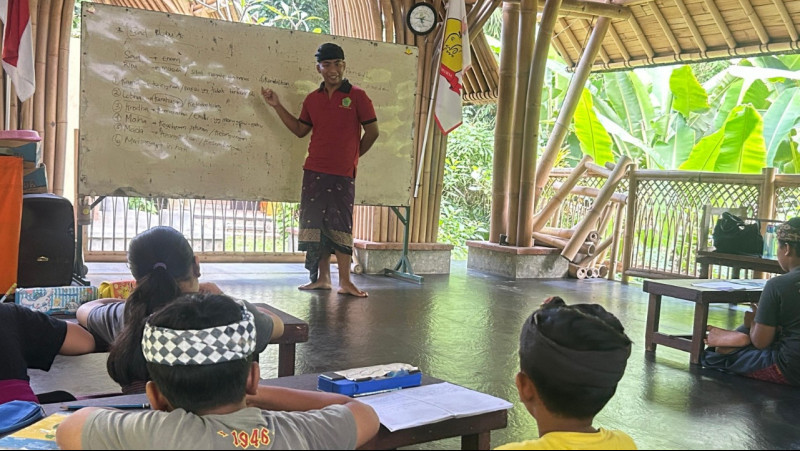
Hindu Religious Counselors from the Ministry of Religious Affairs Office in Gianyar Regency continue to reinforce the moral and spiritual foundation of the younger generation from an early age. This commitment was demonstrated through an intensive face-to-face guidance session led by Hindu Religious Counselors Ni Wayan Wintari and Gusti Ngurah Darma at Pasraman Bali Prawerti Nawasena on Sunday. Through this initiative, it is expected to instill the values of self-control rooted in Hindu teachings, particularly a deeper understanding of the concept of Sad Ripu as an essential foundation for building noble character.
During the guidance session, held in a warm and engaging atmosphere at the pasraman, the counselors introduced the philosophical meaning of Sad Ripu. Derived from Sanskrit, Sad means "six" and Ripu means "enemies." The children learned that Sad Ripu refers to the six inner enemies—or negative traits—that reside within every individual and must be controlled to prevent them from leading to personal and social harm.
The six inner enemies comprise Kama (uncontrolled desire), Lobha (greed), Krodha (anger), Moha (delusion or ignorance), Mada (arrogance or intoxication with power and wealth), and Matsarya (envy). Understanding and mastering these tendencies are regarded as essential steps toward developing self-discipline, emotional maturity, and virtuous conduct.
Ni Wayan Wintari emphasized that character education grounded in religious values should begin in childhood therefore these principles become deeply rooted throughout life.
“Sad Ripu represents one of the greatest moral challenges faced by every individual. If children are not equipped with self-control from an early age, these negative tendencies can hinder their potential and disrupt social harmony. Through this guidance, we hope to nurture individuals who are wise, emotionally resilient, and steadfast in upholding the values of dharma,” she said.
Beyond introducing the six negative traits, the counselors encouraged participants to develop practical skills in managing emotions and making responsible choices. The program emphasized the importance of discipline, honesty, mutual respect, and positive behavior in everyday interactions within the family, the pasraman, and the wider community.
To ensure that the lessons were both meaningful and enjoyable, the counselors adopted interactive teaching methods, including educational games and quiz-based discussions. This engaging approach generated enthusiastic participation and enabled the children to better understand the philosophical significance of Sad Ripu while appreciating the importance of self-mastery from an early age.
The program received positive appreciation from Ni Luh Ketut Adriani, Manager of Pasraman Bali Prawerti Nawasena, who highlighted the significant impact of grassroots religious guidance in strengthening both the moral character and spiritual development of young Hindus amid today's social challenges.
“We hope that religious guidance programs like this will continue, enabling our children to develop strong character and deep spiritual values as they grow,” she said.
The implementation of the Sad Ripu guidance program reflects the Ministry of Religious Affairs Office in Gianyar Regency's commitment to strengthening religious literacy and character education among children. Through the active presence of Hindu Religious Counselors within local communities, the Ministry continues to promote Hindu values as a guiding force in nurturing a generation that is morally upright, spiritually grounded, emotionally resilient, and well prepared to contribute positively to society.
Editor : I Made Juni Saputra
Photographer : I Gede Dipayana
Contributed and translated by Muhammad Mahmud Alhushori