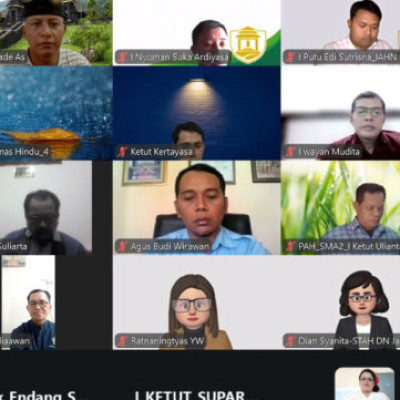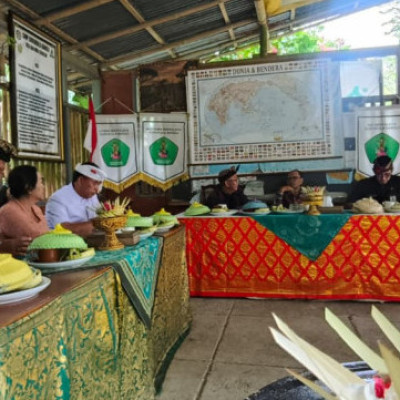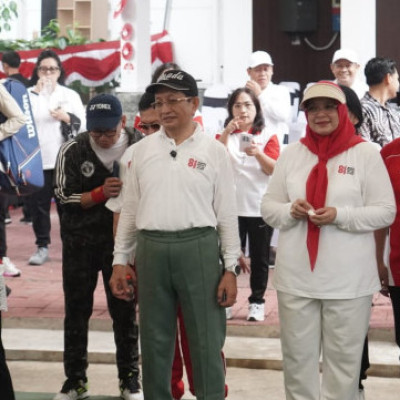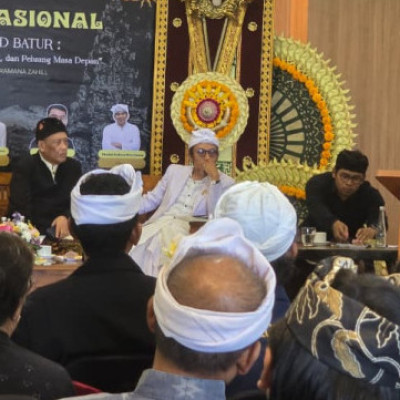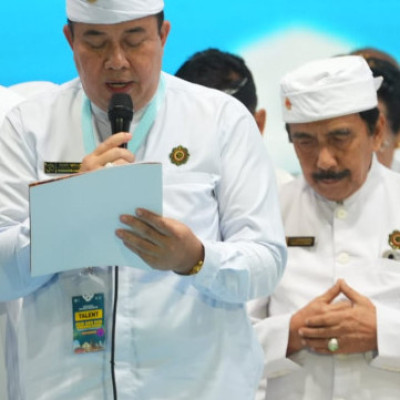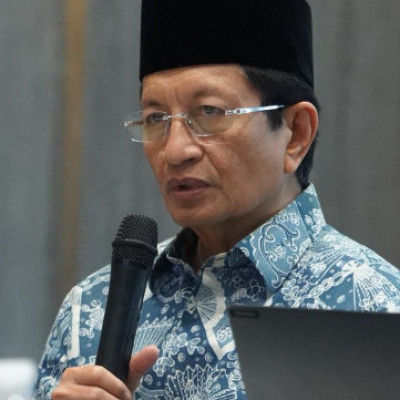


Denpasar (Public Relations) — Directorate General of Hindu Community Guidance (Ditjen Bimas Hindu) as the representative of the Ministry of Religious Affairs, continues to strengthen the governance of Hindu education in Indonesia. Through a Public Hearing (Public Review) on the Draft Amendment to Minister of Religious Affairs Regulation (PMA) Number 2 of year 2024 concerning the Implementation of Widyalaya Education. This meeting was attended by stakeholders to provide constructive input on the proposed regulatory changes.
The meeting held at the Rectorate Hall of the Universitas Hindu Indonesia (UNHI) Denpasar. It was attended by a diverse group of government and community representatives; the Head of the Bureau of Legal Affairs and International Cooperation of the Secretariat General of the Ministry of Religious Affairs, Imam Syaukani; Director General of Hindu Community Guidance, I Nengah Duija; Secretary of Directorate General of Hindu Community Guidance, Ida Made Pidada Manuaba; Director of Hindu Education, I Ketut Sudarsana; and Head of Hindu Religious Education at Kemenag Bali Province, I Made Subawa.
Also in attendance were representatives of the Governor of Bali, the Chair of Commission IV of the Bali Provincial DPRD, regents and mayors across Bali, the Majelis Desa Adat (MDA), leaders of Hindu higher education institutions, Hindu youth organizations, Widyalaya administrators, as well as Hindu educators and scholars.
The public hearing centered on discussions regarding the inclusion of a clause on state recognition (penegerian) of Widyalaya—a significant step in strengthening the continuity and identity of Hindu education nationwide.
In his written remarks delivered by the Head of the Provincial Office for the Advancement of Indigenous Communities, I.G.A.K. Kartika Jaya Saputra, Bali Governor I Wayan Koster expressed deep appreciation to Ministry of Religious Affairs for the attention and initiatives to improve Hindu education governance.
“This public hearing reflects a spirit of transparency, participation, and accountability in developing public policies that serve the community,” he noted.
He affirmed the Bali Provincial Government’s gives full support for the initiative, stating that it aligns with the regional development vision Nangun Sat Kerthi Loka Bali. Moreover, the state recognition of Widyalaya is not merely an administrative matter but an important effort to safeguard the identity, dignity, and spiritual values of the Hindu community amid global shifts.
In his address, Imam Syaukani emphasized the need to maintain balance between two key Hindu educational institutions: Pasraman and Widyalaya.
“Pasraman is deeply rooted in strong traditions. We must ensure that this policy does not cause pasraman to be overlooked. Both must coexist—pasraman must remain strong, and Widyalaya must continue to innovate,” he asserted.
He also encouraged team of Directorate General of Hindu Community Guidance to consolidate all public input from the hearing and submit it promptly to the Ministry of Law and Human Rights for harmonization. Imam further stated that by the 2026–2027 academic year, State Widyalaya institutions are expected to begin the admission of new students.
Meanwhile, Director General of Bimas Hindu, Prof. I Nengah Duija, highlighted that the amendment to the PMA is a strategic step in building a modern, inclusive Hindu education system rooted in Dharma values.
“This amendment is not simply a regulatory revision; it represents our moral commitment to ensuring that Hindu education becomes a place for cultivating noble character, deep spirituality, and well-rounded intellectual capacity,” Prof. Duija said.
He stressed that future Hindu education policies must focus on value and character transformation, not merely administrative or institutional aspects. Hindu education, he added, should serve as a vital instrument in shaping a civilization based on Dharma, morality, and wisdom.
“Our vision, Widyalaya as a Hindu educational institution that is character-driven, excellent, and globally competitive—while remaining grounded in cultural traditions and dharma values. This requires strong synergy between the government, community, and educational institutions to build a dignified educational ecosystem,” he continued.
Prof. Duija expressed hope that the public hearing would serve as more than a forum for discussion. He expected it to become a shared moment of reflection, reaffirming the direction of Hindu education as it evolves from simply teaching to genuinely nurturing values and wisdom.
Director of Hindu Education, I Ketut Sudarsana, added that in January 2026, Directorate General of Hindu Community Guidance will establish a Widyalaya Needs Analysis Team and prepare a Widyalaya Master Development Plan as the foundation for proposing the establishment of State Widyalaya institutions.
“We will carry out mapping and assessment to identify Widyalaya units eligible for state recognition. This will serve as a strong foundation for the future of Hindu education in Indonesia,” he said.
The meeting also featured expert speakers Prof. Dr. I Made Arya Utama, S.H., M.Hum., and Dr. Drs. I Gusti Made Ngurah, M.Si., who underscored the importance of adaptive regulations that respond to local needs and encouraged efforts to strengthen the institutional capacity of Widyalaya so they can compete within the national education ecosystem.
The event concluded warmly with an open discussion and a public input session.
Through this Public Hearing, Directorate General of Hindu Community Guidance hopes that the state recognition of Widyalaya will become a major milestone in building an inclusive, high-quality, and competitive Hindu education ecosystem—while upholding the noble spiritual values that form the core of Hindu education in the archipelago.
Kontributor: Muhammad Mahmud Alhushori
Editor: Jaya Perdhana
Fotografer: I Gusti Ngurah Sathya Dharma