
Why should humans be grateful for being born as human beings? This question often arises in discussions of Hindu teachings on the essence of life. The answer has been explained for thousands of years in the Sarasamuccaya, one of the key Hindu ethical scriptures, which emphasizes that birth as a human is a rare and noble opportunity. Only humans possess the ability to use reason and discernment to choose between goodness (Dharma) and wickedness (Adharma).
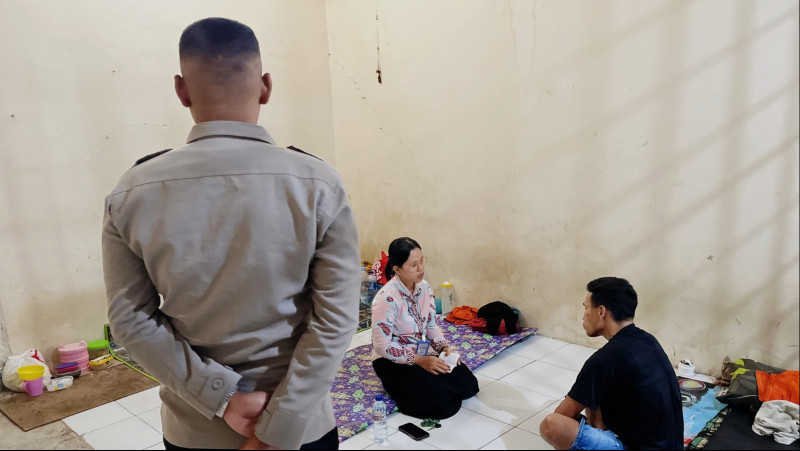
This message was conveyed by Hindu Religious Counselor of the Ministry of Religious Affairs Office in Buru Regency, Pipin Jujun Pratiwi, S.Ag., during a Spiritual and Mental Guidance session (Binrohtal) at the Buru Police Resort on Wednesday. The activity forms part of the Ministry of Religious Affairs’ commitment to strengthening character development and mental well-being through spiritual guidance that is humanistic, educational, and rooted in religious values.
During the session, Pipin presented material on “Karma Phala: Every Action Inevitably Brings Results.” She explained that the law of Karma Phala represents a universal law of cause and effect. Every human thought, word, and action produces consequences according to the quality of the deed.
She explained that there is no meaningless action. Its results may manifest today, tomorrow, or even years later, but every karma will inevitably bear fruit in line with divine law.
Referring to Sarasamuccaya Sloka 2, Pipin explained that only human beings possess the ability to think, reflect, and determine life choices.
“As human beings, we are endowed with reason and intellect to determine the choices we make in life. We can choose the path of Dharma or the path of Adharma. Therefore, we must also be prepared to accept the consequences of every choice we make,” she explained.
This is what distinguishes humans from other living beings. Viewed from the Hindu perspective, being born as a human is not merely a blessing but also a golden opportunity to improve oneself, cultivate virtue, and draw closer to God through the practice of Dharma.
For this reason, Hindus are taught to express gratitude for human birth by filling life with actions that benefit oneself, family, society, and the universe.
Pipin emphasized that Hindu teachings never close the door to transformation. As long as life remains, there is always an opportunity to improve oneself and cultivate better karma.
“The mistakes in the past should never become a reason to surrender. In fact, awareness of those mistakes can become the starting point for change. Today is an opportunity to plant seeds of goodness that will one day bear fruit,” she said.
She encouraged all Binrohtal participants to develop positive habits, such as worshipping sincerely, respecting others, controlling emotions, expanding knowledge, helping those in need, and practicing discipline, honesty, and responsibility. All of these actions represent concrete efforts to cultivate good karma, which will shape the quality of life in the future.
Through this Binrohtal activity, the Ministry of Religious Affairs Office in Buru Regency invites the community to understand more deeply that being human is not merely a biological birth, but also a spiritual responsibility.
The Sarasamuccaya teaches that humans possess the freedom to choose their path in life. These choices determine the quality of one’s karma, shape character, and ultimately influence one’s future. Therefore, gratitude for human birth should be manifested through a commitment to continuously do good, uphold integrity, improve oneself, and practice Dharma in everyday life.
This awareness serves as the foundation for creating a harmonious, peaceful, and dignified life—an aspiration continuously promoted by the Ministry of Religious Affairs through various religious development programs for the community.
Editor : I Made Juni Saputra
Photographer : I Gede Dipayana
Contributed and translated by Muhammad Mahmud Alhushori