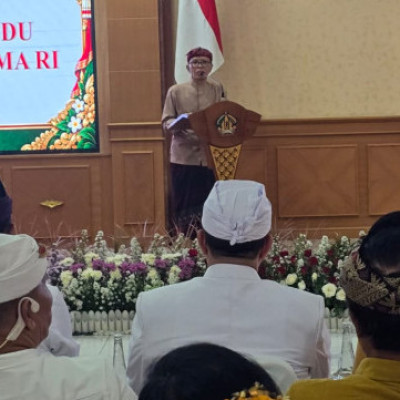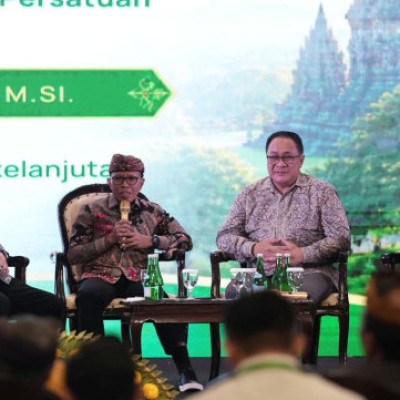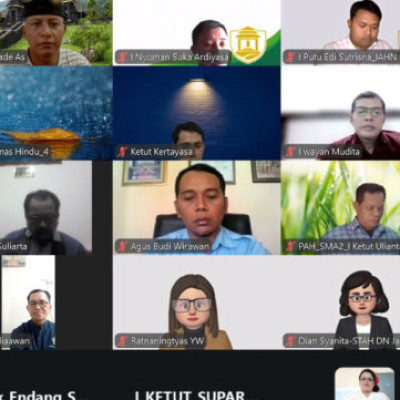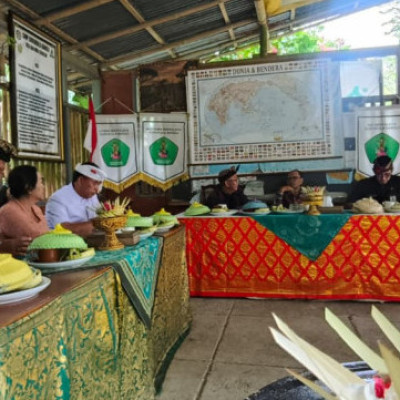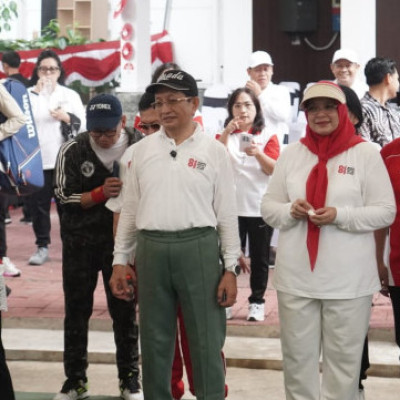

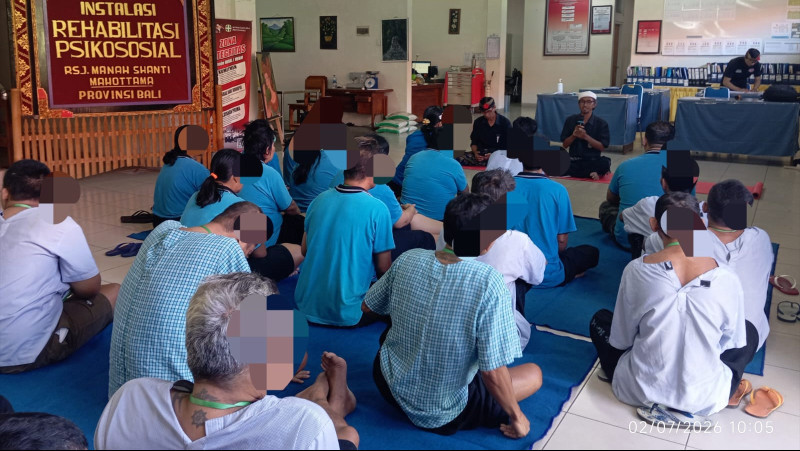
A spiritual approach is increasingly recognized as an essential component in supporting mental health recovery. Guided by this commitment, Hindu Religious Counselors from the Ministry of Religious Affairs Office in Bangli Regency conducted a religious guidance and counseling program for psychosocial rehabilitation patients at Manah Shanti Mahottama Mental Hospital in Bangli on Thursday.
The program began with the performance of Nitya Karma Puja Tri Sandhya, followed by Bhadrika Pranayama, a recreational therapy session through the Jigjig Show, and a religious lecture titled “The Foundations of a Healthy Lifestyle Based on the Perspective of Hinduism.” The series of activities was designed to strengthen the participants’ mental, spiritual, and social well-being throughout their rehabilitation process.
During the session, the Hindu Religious Counselors explained that the concept of a healthy lifestyle in Hinduism extends beyond physical well-being. It emphasizes the harmonious balance of the mind, spirituality, and behavior as interconnected elements that support overall health and personal growth.
“A healthy lifestyle from the perspective of Hinduism is not limited to physical health itself. It also encompasses harmony between the mind, spirituality, and conduct. By strengthening the values of Sraddha, Bhakti, Sadhana, Kriya, and Chanda, we hope that rehabilitation participants will develop the mental and spiritual resilience needed to return to society as independent, productive, and harmonious individuals within their families and communities,” said a Hindu Religious Counselor from the Ministry of Religious Affairs Office in Bangli Regency.
The counseling focused on five fundamental values in Hindu teachings: Sraddha (faith in God), Bhakti (devotion and compassion), Sadhana (self-discipline), Kriya (positive and meaningful action), and Chanda (building positive friendships and social relationships). These principles are expected to strengthen character, foster optimism, and support the participants’ psychosocial rehabilitation journey.
Through this initiative, religious guidance is expected to become an integral part of psychosocial rehabilitation. Strengthening spiritual values not only contributes to mental health recovery but also helps rebuild self-confidence and prepares participants to reintegrate into society as empowered, self-reliant, and productive individuals.
The program reflects the Ministry of Religious Affairs’ ongoing commitment to delivering impactful religious services that promote holistic well-being. By integrating spiritual guidance with psychosocial rehabilitation, the Ministry seeks to foster not only mental recovery but also personal resilience, social harmony, and a renewed sense of purpose among members of the community.
Editor : I Made Juni Saputra
Photographer : I Gede Dipayana
Contributed and translated by Muhammad Mahmud Alhushori