
Om Swastyastu.
This edition of Pelita Dharma highlights the theme “Religious Tolerance.”
When discussing religious tolerance, there are three essential questions to reflect on:
What is religious tolerance?
What is the objective of religious tolerance?
How can religious tolerance be practiced in daily life?
Understanding Religious Tolerance
Religious tolerance is the attitude of mutual respect and appreciation among followers of different faiths. This noble value is beautifully expressed in the Kakawin Sutasoma by Mpu Tantular:
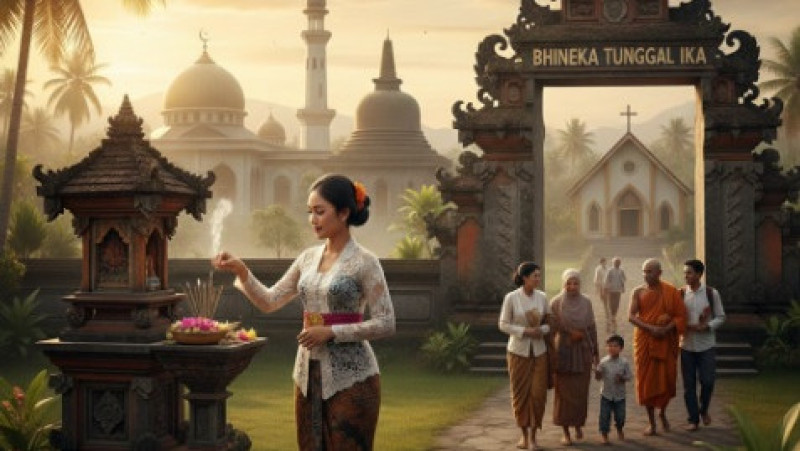
“Bhinneka Tunggal Ika Tan Hana Dharma Mangrwa”
which means, “unity in diversity; they are different while being one the truth cannot become two (there is no other second truth)”
This ancient verse shows that the spirit of religious tolerance has existed since long ago, particularly during the era of the Majapahit Kingdom. Indonesia is a nation of countless islands, ethnic groups, and religions. Yet despite these differences, we are one people under the Republic of Indonesia. Diversity should never divide us — it is what enriches us as a nation.
Wherever we come from, whatever our ethnicity, background, or religion, we remain one people — Indonesians.
In Hinduism, there are many names used to refer to the Divine: Iswara, Brahma, Wisnu, Siwa, and others. These names represent the various manifestations of God, each reflecting different aspects and functions of the same Supreme Being.
Sometimes people misunderstand this diversity of names and forms. However, Hinduism teaches that God is ultimately One. Regardless of how one expresses devotion, the Divine remains singular. As written in the Veda:
Ekam Ewa Adwityam Brahman
meaning, “God, or Ida Sang Hyang Widhi Wasa, is One — there is no other.”
The wise may call this One by many names.
The first principle of Pancasila, Ketuhanan Yang Maha Esa (Belief in the One Supreme God), guarantees every person the freedom to embrace their faith, practice their religion, and respect the beliefs of others.
Religious tolerance means showing respect for others’ beliefs, never forcing one’s will, and refraining from criticizing or insulting other religions for any reason. A truly tolerant person does not interfere with others’ worship, damage places of worship, or disrupt the faith of others.
The Objective of Religious Tolerance
The objective of religious tolerance is to deepen one’s faith and devotion by recognizing the presence of other beliefs. When we are aware of the diversity of religions around us, we can appreciate our own faith more fully and live it sincerely, while avoiding conflicts caused by differences.
Religion should never be used as a tool for division — it should serve as a bridge for unity. When conflicts arise, everyone suffers. Division harms individuals and communities alike. Through tolerance, we learn to complement one another and find harmony within our diversity. Differences in faith must never become grounds for hostility.
Practicing Religious Tolerance
Religious tolerance can be demonstrated through simple actions in everyday life, such as:
Building friendships with people of all faiths.
Respecting and providing space for others to carry out their religious practices.
Avoiding discrimination based on religion or belief.
In essence, religious tolerance means recognizing that everyone has equal rights and deserves to be treated with fairness, respect, and dignity — for the sake of peace, comfort, and collective well-being.
Om Santih, Santih, Santih Om.
I wayan Sujana, S.Fil (Hindu Priest)
Kontributor: Muhammad Mahmud Alhushori
Editor: Jaya Perdhana
Ilustrator: Jaya Perdhana