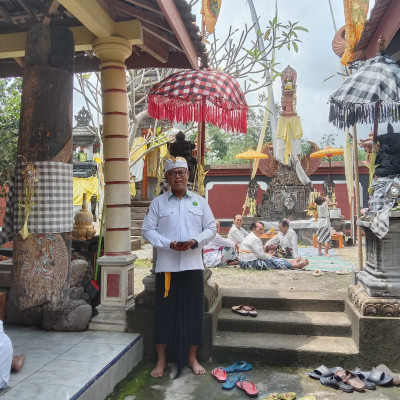


Human beings, as creations of Ida Sang Hyang Widhi Wasa endowed with sabda, bayu, and idep, occupy the highest place among all living beings. The divine gift of thought must be used to maintain balance in the environment so that life continues harmoniously, fostering prosperity and peace.
Every action and decision, humans are constantly faced with choices between good and evil, right and wrong. Therefore, self-control is essential. When the senses cannot be restrained, it is like a charioteer attempting to steer a wild horse—reckless and uncontrollable, leading only to downfall.
Sarasamuccaya, Sloka 2:
Manusah sarvabhutesu varttate vai subhasubhe. Asubhesu samavistam subhesvevavakarayet.
“Among all living beings, only those born as humans can perform both good and evil deeds. Therefore, one should dissolve all evil actions through good ones; such is the true purpose and merit of being human.”
This verse emphasizes that every human being has the potential for both virtue and wrongdoing. To achieve harmony in life, one must prioritize good deeds and wisely utilize the sabda, bayu, and idep within oneself.
The Dark Traits of Humanity (Sapta Timira)
The Sapta Timira—the seven forms of darkness—describe the negative tendencies that reside within the human mind. These are interconnected with the teachings of Panca Yama Brata, Panca Nyama Brata, and Dasa Yama Brata.
In daily life, human desires can easily stray from Dharma. When this occurs, the dark qualities of Sapta Timira arise.
Derived from Sanskrit, sapta means “seven” and timira means “darkness” or “ignorance” (avidya). Thus, Sapta Timira signifies “seven forms of darkness” that cloud human consciousness. If left unchecked, they manifest as cruelty, anger, jealousy, envy, slander, theft, and violence—actions that defy the path of Dharma.
1. Surupa – Physical Beauty
Surupa refers to beauty or handsomeness, gifts bestowed by Hyang Widhi Wasa. While one may feel blessed to possess them, arrogance must be avoided, for beauty is temporary form. True beauty gains meaning only when accompanied by noble character.
Sarasamuccaya 21:
Surupatamatmagunam ca vistaram kulanvayam, Drvyasamred dhisancayam, naro hi sarvam labhate, Yathakretam sadasubhenatmakrtena karmana
“Through good deeds, one may be reborn as a person of beauty, virtue, nobility, wealth, and power—the fruits of virtuous karma.”
Thus, beauty born of good karma should inspire humility, not pride or vanity.
2. Dhana – Wealth
Dhana signifies material wealth, something everyone desires. It exists in three forms—bhoga, upabhoga, and paribhoga (three basic daily needs of humans) While wealth can bring comfort, it also presents great temptation. It must therefore be earned and used in accordance with Dharma.
Sarasamuccaya 267:
Jatasya hi kule mukhye paravittesu grdhyatah lobhasca Prajnamahanti prajna hanti hata sriyam
“Even one born of noble lineage, if greedy for others’ possessions, loses wisdom through avarice; and when wisdom is lost, so too are nobility, beauty, and glory.”
Wealth that is not guided by virtue blinds the heart to divinity and compassion.
3. Guṇa – Knowledge
Guṇa refers to knowledge and intellect. Wisdom is vital in facing life’s challenges, yet when used for deception, corruption, or selfishness, it becomes dangerous.
Knowledge must always be guided by morality and faith. As the saying goes:
“Science without religion is lame; religion without science is blind.”
The Sarasamuccaya 113 warns that those who ignore the teachings of the Vedas and Dharmasastra will suffer endless misery. Thus, intellect must serve righteousness.
4. Kulina – Noble Lineage
Kulina means noble ancestry. While it is honorable to come from a respected lineage, pride should not lead to arrogance or contempt.
Sarasamuccaya 63:
“The conduct proper for all social orders is honesty, selflessness, self-discipline, and control of the senses.”
True nobility is reflected not in bloodline but in behavior, humility, and virtue.
5. Yowana – Youth
Yowana represents youth—a time of passion, energy, and creativity. This stage of life should be used to learn, work hard, and build a strong moral foundation.
The Sarasamuccaya encourages young people to fill their days with study, discipline, and good deeds. Misused youth lead to instability and decline, while disciplined youth ensures a brighter future.
6. Sura – Intoxicants
Sura refers to alcoholic drinks and intoxicating substances. Overindulgence leads to loss of consciousness and moral awareness, bringing harm and sorrow.
Sarasamuccaya 325:
“Do not associate with those addicted to deceit, cruelty, and intoxicants, for such company leads only to suffering.”
Avoiding intoxicants preserves clarity, health, and dignity.
7. Kasuran – False Courage
Kasuran means false or misguided bravery. True courage helps overcome life’s challenges, but courage without Dharma turns into violence and cruelty.
Sarasamuccaya 149:
“Those who seize others’ wealth through power and force lose not only their riches but also their Dharma and virtue.”
Real bravery is expressed through patience, wisdom, and justice—not through dominance or anger.
Avoiding the Influence of Sapta Timira
To remain free from these seven forms of darkness, one must cultivate discipline and self-control. Hindu philosophy offers the Panca Yama Brata, five principles of restraint:
Ahimsa – Non-violence
Brahmacari – Celibacy during the pursuit of knowledge
Satya – Truthfulness and integrity
Awyawaharika – Sincerity in conduct
Asteya – Honesty and non-stealing
Complementing these are the Panca Nyama Brata, five disciplines for cultivating good habits:
Akroda – Freedom from anger
Guru Susrusa – Respect and devotion to teachers
Sauca – Purity in thought, word, and deed
Aharalaghawa – Moderation in eating
Apramada – Mindfulness and humility in learning sacred teachings
Together with the Dasa Yama Brata, the ten moral disciplines, these teachings form the foundation of ethical living.
Conclusion
To achieve harmony and prosperity, we must recognize the sacred privilege of being human—endowed with sabda, bayu, and idep. Let us nurture these divine gifts by mastering the Sapta Timira within ourselves and cultivating noble conduct in every aspect of life.
Through self-awareness and discipline, we fulfill the true essence of humanity:
living in truth, harmony, and devotion to Ida Sang Hyang Widhi Wasa.
Dr. I Made Jiwa Astika, M.MT ( Hindu Priest)
Kontributor: Muhammad Mahmud Alhushori
Editor: Jaya Perdhana
Ilustrator: Jaya Perdhana