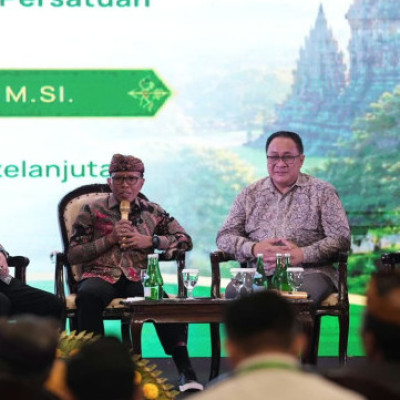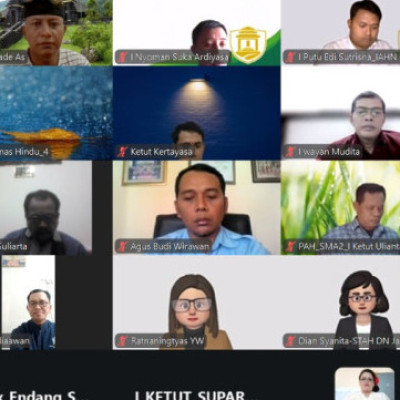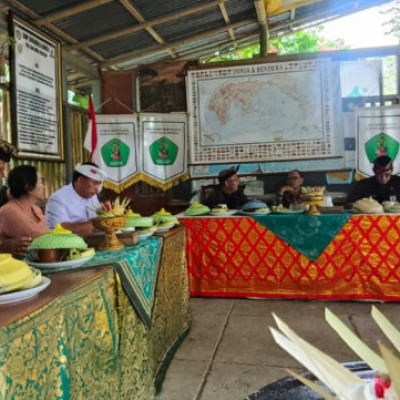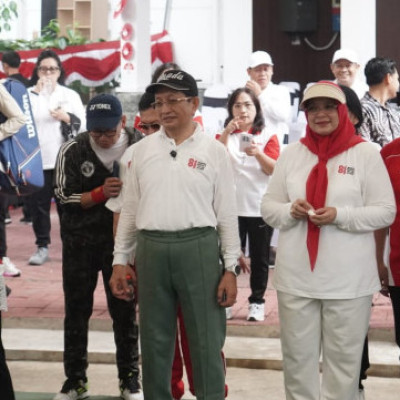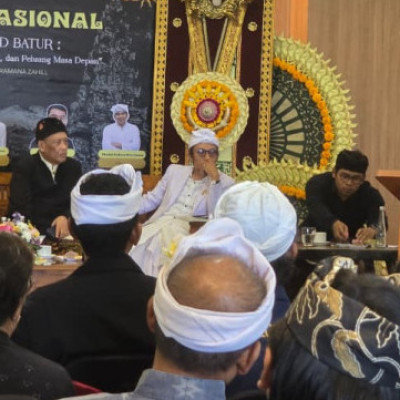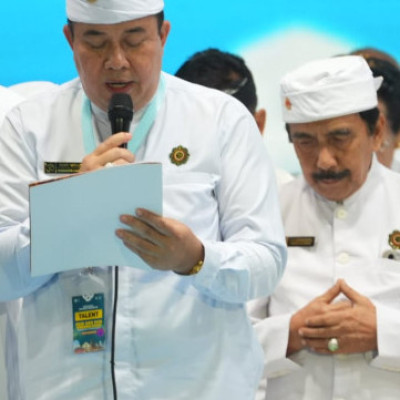

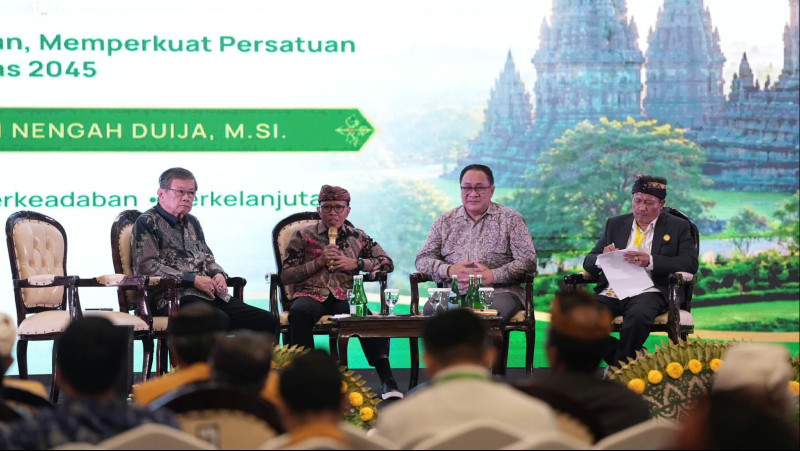
The 13th Mahasabha of Parisada Hindu Dharma Indonesia (PHDI), held on October 8–11, 2026, at the Grand Sahid Jaya Hotel in Jakarta, served as an important occasion to reaffirm the values of religious harmony and moderation as foundations for realizing Indonesia Emas 2045.
The Director General of Hindu Community Guidance Prof. I Nengah Duija emphasized the importance of implementing Dharma into concrete actions to maintain harmony, respect differences, and strengthen national unity.
“Hindu teachings serve not only as spiritual guidance but also as an ethical foundation for building an inclusive, tolerant, and civilized society,” Prof. Duija said.
According to Prof. Duija, religious moderation from a Hindu perspective not intended to universalize beliefs. Rather, it encourages people to develop a mature and respectful approach to differences. The values of Dharma should be reflected in everyday behavior, including honesty, social responsibility, and care for the environment.
“Religious moderation is not about eliminating differences, but about fostering an awareness that diversity is a reality that must be approached with wisdom, mutual respect, and a spirit of brotherhood,” he said.
Prof. Duija outlined several Hindu teachings that underpin social harmony, including Tat Tvam Asi, which encourages empathy and respect for others, and Vasudhaiva Kutumbakam, which emphasizes universal brotherhood.
The principle of Tri Hita Karana also teaches the importance of maintaining harmony between human beings and God, among fellow human beings, and between humanity and the environment. Meanwhile, Ahimsa, or nonviolence, and Satya, or truthfulness, provide ethical foundations for building peaceful social relationships.
The values of solidarity and equality are also reflected in Rig Veda X.191.2, which emphasizes dialogue and unity, and Bhagavad Gita V.18, through the teaching of samadarśana—the ability to regard all beings with equal respect, regardless of their backgrounds.
“Harmony is built through mutual respect, open dialogue, and a willingness to work together for the common good,” Prof. Duija said.
In terms of religious policy, the Directorate General of Hindu Community Guidance has aligned its 2025–2029 Strategic Plan with the principles of Rukun, Maslahat, dan Cerdas—harmony, public benefit, and informed understanding. Its priority programs aim to deliver tangible benefits to society, including through the development of Sukinah families, the empowerment of houses of worship, and interfaith collaboration.
“Religious harmony must be implemented into concrete action rather than remaining merely a slogan. Families, educational institutions, houses of worship, and all elements of society have important roles to play in instilling tolerance and strengthening social responsibility,” he emphasized.
In education and youth development, Prof. Duija also encouraged young Hindus to strengthen their religious and digital literacy, use social media responsibly, and actively help prevent the spread of hate speech.
He expressed hope that young people would become pioneers of peace by using technology to spread positive messages, expand opportunities for dialogue, and foster interfaith collaboration.
“Indonesia Emas 2045 cannot be achieved through economic and technological progress alone. It also requires a society with strong character and integrity, capable of living together harmoniously amid diversity. Religious harmony and moderation are essential foundations for achieving this vision,” he concluded.
Through the practical application of Dharma in community life, religious harmony and moderation are expected to become an integral part of efforts to safeguard national unity, strengthen social cohesion, and support the realization of Indonesia Emas 2045.
Contributor : I Made Juni Saputra
Photographer : I Gusti Ngurah Sathya Dharma