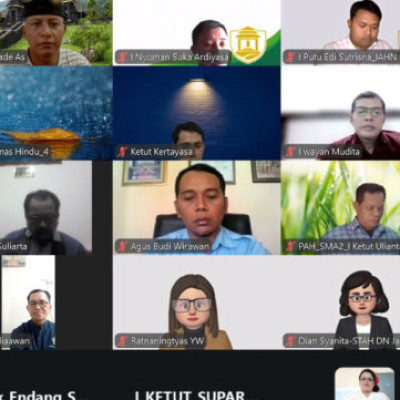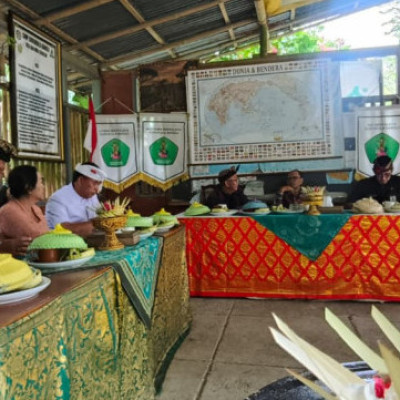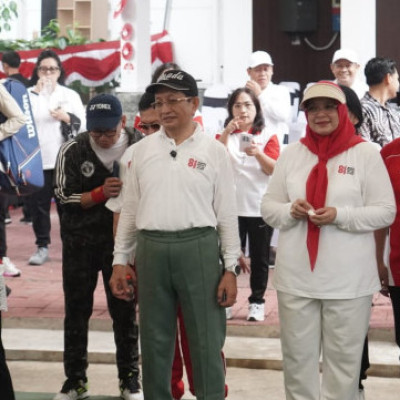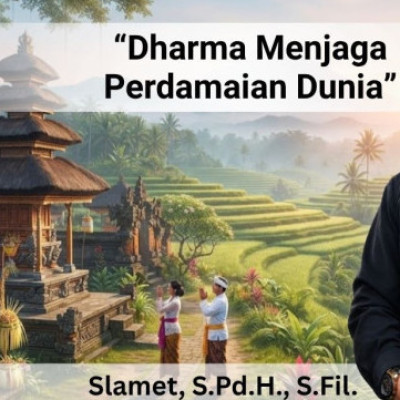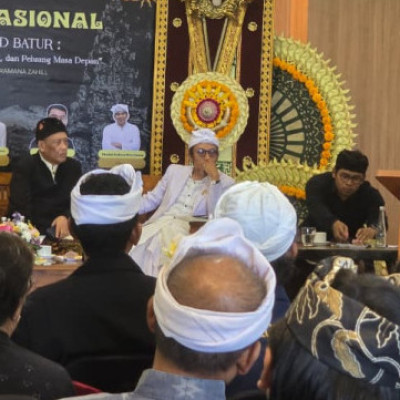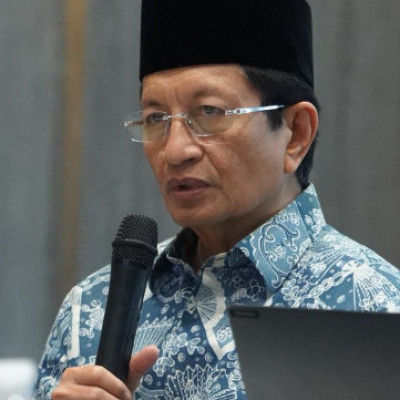

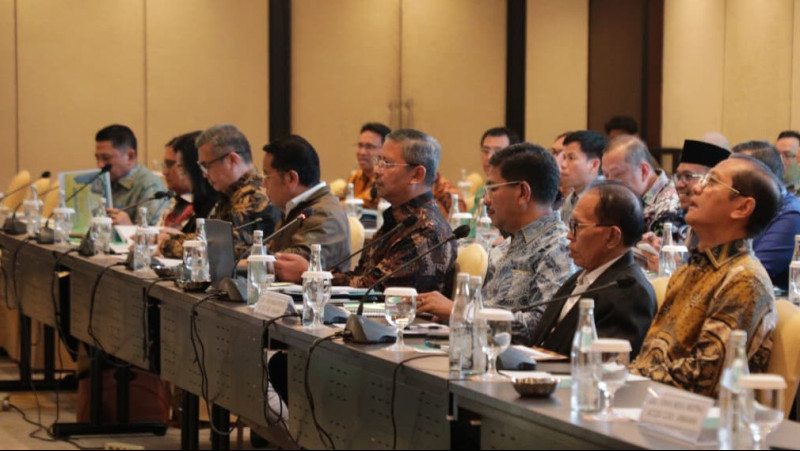
A series of strategic achievements in strengthening Hindu religious services and education took center stage during a Focus Group Discussion (FGD) with members of the House of Representatives (DPR) held at Hotel Gran Melia Jakarta on Friday (12 June 2026). During the forum, Director General of Hindu Community Guidance, Prof. I Nengah Duija, presented the progress of various programs that have been implemented, while also outlining ongoing challenges in meeting the needs of Hindu communities across Indonesia.
Addressing participants which included Echelon I and II officials of the Ministry of Religious Affairs, Prof. Duija stated that the transformation of Hindu religious services has continued to deliver significant results. One notable indicator is the increasing number of legally registered Hindu houses of worship through the issuance of the Hindu House of Worship Registration Certificate (Tanda Daftar Rumah Ibadah – TDRI).
As of June 2026, a total of 18,510 registration certificates had been issued out of 19,108 applications submitted by communities nationwide. This achievement represents an important step toward providing legal certainty and strengthening the institutional governance of Hindu religious organizations in Indonesia.
"Religious services must respond directly to the needs of the community. Therefore, we continue to accelerate services that are accessible, transparent, and capable of providing certainty for the public," said Prof. Duija.
Beyond administrative services, strengthening worship facilities remains a key priority. During mid-2026, hundreds of proposals for the construction and rehabilitation of Hindu houses of worship had been received, with dozens of sites already receiving government assistance as part of efforts to improve religious infrastructure for Hindu communities.
Meanwhile, in the education sector, the expansion of Widyalaya institutions has emerged as one of the most notable achievements. Currently, there are 150 Widyalaya schools operating across Indonesia, ranging from primary-level institutions to vocational Widyalaya. These educational institutions play a vital role in expanding access to Hindu-based education while fostering character development among young Hindus.
Prof. Duija explained that the growing public demand for Hindu education has encouraged proposals for the establishment of new state-run Widyalaya schools, as well as the conversion of several private Widyalaya institutions into public schools in various regions.
"Hindu education is not solely focused on academic excellence; it is also intended to develop individuals with strong character, integrity, and a deep sense of responsibility toward the environment and society," he emphasized.
Positive developments have also been recorded in Hindu higher education. Indonesia currently has 14 Hindu higher education institutions, comprising five public and nine private institutions, with a total student population of 16,855. Continuous efforts are being made to enhance institutional quality and academic program accreditation in order to strengthen the competitiveness of Hindu higher education graduates at the national level.
In addition to education and religious services, community development efforts have been reinforced through a network of Hindu religious counselors stationed throughout the country. These counselors serve as frontline representatives in guiding communities, promoting religious moderation, and fostering social harmony within Indonesia’s diverse society.
Despite these accomplishments, Prof. Duija acknowledged that several challenges remain, particularly regarding the availability of human resources across various work units and service sectors. The need for additional religious counselors, Hindu religion teachers, and religious service personnel continues to be a priority to ensure equitable and high-quality services for all Hindu communities.
Prof. Duija explained that the achievements attained so far demonstrate that the development of Hindu religious affairs and education is moving in a positive direction. Support from various stakeholders, including the DPR, has played a crucial role in expanding the impact of programs that directly benefit Hindu communities throughout Indonesia.
"What we have achieved today is not merely a collection of statistics, but a reflection of our collective efforts to deliver religious and educational services that are increasingly responsive to the needs of the Hindu community," he affirmed.
The FGD served as a strategic platform for strengthening collaboration between the government and key stakeholders in formulating future initiatives to enhance Hindu religious services, education, and sustainable human resource development. The achievements presented during the forum reaffirm the commitment to providing inclusive, professional, and impactful public services for Hindu communities across Indonesia.
Editor : I Made Juni Saputra
Photographer : I Gusti Ngurah Sathya Dharma
Contributed and translated by Muhammad Mahmud Alhushori