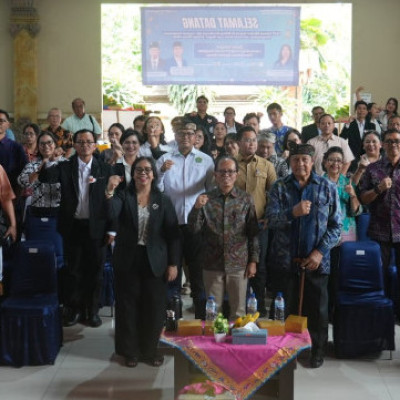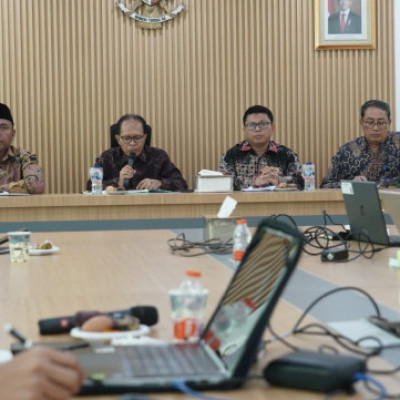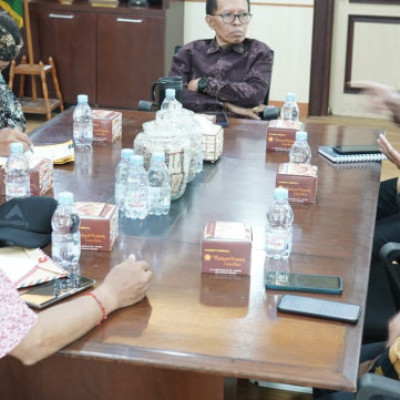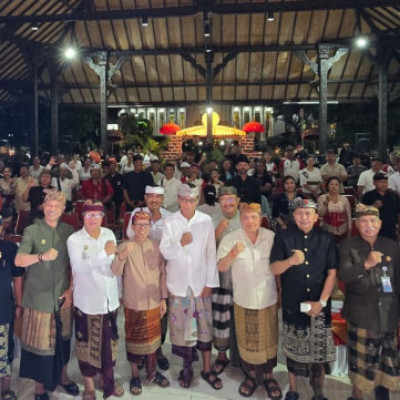
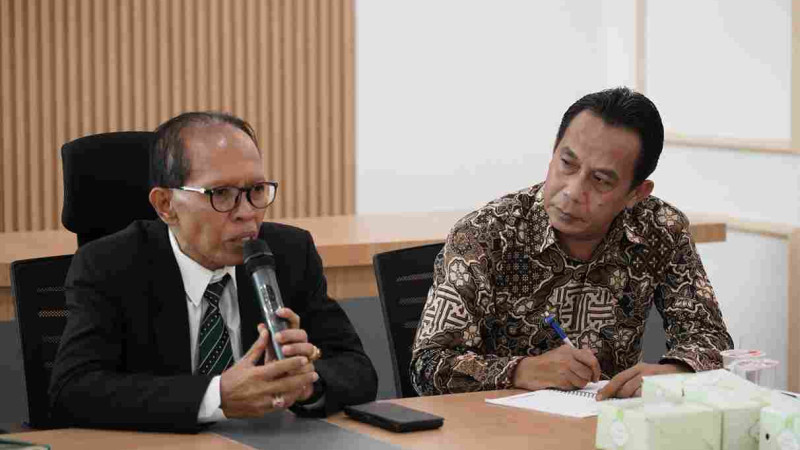
Jakarta (Hindu Public Relations) — The Directorate General of Hindu Community Guidance (Ditjen Bimas Hindu) of the Ministry of Religious Affairs held a Socialization on Policies and Strategies for Preventing Maladministration, along with a 2025 Maladministration Assessment Assistance Session. The agenda took place at the Ditjen Bimas Hindu Meeting Room, 14th Floor, Jalan M.H. Thamrin No. 6, Jakarta, and was attended by officials and civil servants (ASN) both onsite and online. Representatives from the Indonesian Ombudsman served as keynote speakers at the session on Wednesday (12/11/2025).
The agenda was officially opened by the Secretary of Ditjen Bimas Hindu, Dr. Ida Made Pidada Manuaba, who emphasize the essence of strengthening the competence and spirit of young ASN to deliver optimal public service. He highlighted the Directorate General’s target of achieving Integrity Zone status toward a Corruption-Free Area (WBK) – Wilayah Bebas Korupsi and a Clean and Service-Oriented Bureaucratic Area (WBBM) – Wilayah Birokrasi Bersih dan Melayani by 2030.
“Public service must be delivered through the Pancadatu principles—straightforward, focused, and sincere—so that it contributes positively to ASN welfare and public satisfaction,” he said.
Ombudsman Highlights Ethical Conduct and Digital Awareness
Ombudsman’s representative Mr. Andi explained that maladministration includes unlawful practices in public service, such as excessive delays, abuse of authority, and discriminatory treatment. He emphasized the need for rigorous mitigation through consistent implementation of service Standard Operating Procedures (SOP) and responsible ASN conduct, particularly in digital spaces.
“Online behavior reflects the integrity and reputation of an institution. ASN must engage wisely in digital interactions to prevent unnecessary public fluctuation,” he emphasized.
He also outlined updates to the national public service evaluation framework, which now assesses four dimensions—input, process, output, and complaints—alongside public trust indicators and audit findings. In the 2024 assessment, the Ministry of Religious Affairs’ Directorate of Hindu Religious Affairs scored 88.92, a decrease from 93 the previous year due to newly added digital service indicators.
Digital Service Reform Set as 2026 Priority
Director General of Hindu Community Guidance, Prof. Dr. I Nengah Duija, affirmed that strengthening digital service delivery will be a top priority in 2026.
“Our focus will be directed toward four strategic areas: synchronizing service big data, enhancing ASN capacity through service excellence training, developing integrated service infrastructure (PTPSP), and establishing ministry-wide service standards,” he stated.
The session continued with an interactive discussion covering digital risk mitigation, public complaint management, and compensation mechanisms for service delays. The Secretary of Directorate General of Hindu Community Guidance also emphasized the importance of improving ASN competence in complaint handling to ensure responses that are wise, empathetic, and solution-oriented.
“Complaints Are a Mirror of Our Service Quality”
Prof. Duija reminded participants that public complaints provide a clear reflection of service performance.
“If complaints still arise, it means we still have room to improve. Public service must be a concrete expression of an ASN’s dharma toward the community,” he concluded.
This activity serves as a strategic step by Prof. Duija to strengthen public service integrity based on dharma values and digital innovation, moving toward clean, transparent, and service-oriented governance.
Kontributor: Muhammad Mahmud Alhushori
Editor: Jaya Perdhana
Fotografer: I Gusti Ngurah Sathya Dharma