
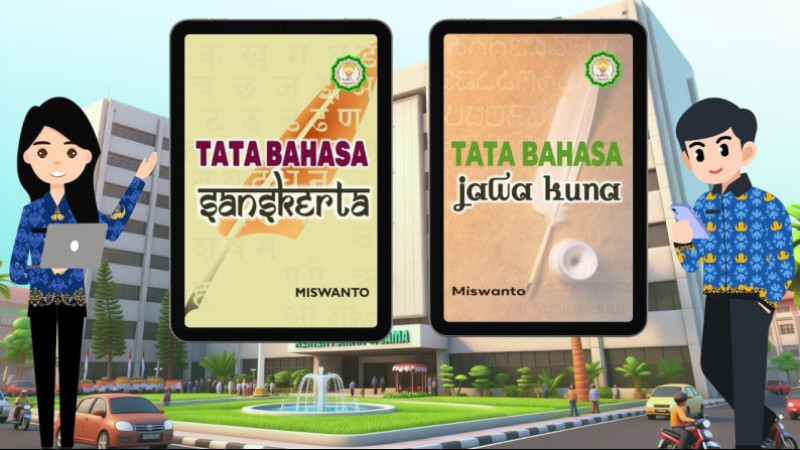
A remarkable achievement has emerged from the field of Hindu education. Miswanto, S.Ag., M.Pd.H., a Hindu religion teacher who also serves as Principal of SD Negeri Pesanggrahan 01 Batu and lecturer at STAH Shantika Dharma Malang, has earned national recognition. Two of his books have been officially selected for the Local Knowledge Acquisition Program (APL) Phase I of 2026, organized by the Badan Riset dan Inovasi Nasional (BRIN).
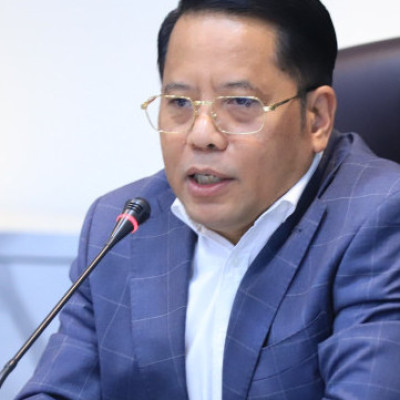
This achievement was warmly greeted by the Director of Hindu Education at the Directorate General of Hindu Community Guidance, Ministry of Religious Affairs, I Ketut Sudarsana. He regarded the achievement as the result of a dedicated educator’s consistent commitment to preserving Indonesia’s Archipelago.
According to BRIN’s official announcement (No. B-2761/II.7/FR.05.01/4/2026), signed by the Deputy for Research and Innovation Facilitation, Agus Haryono, Miswanto’s two books were among 76 works selected through a rigorous process from a total of 167 submissions. The selected titles are:
- Old Javanese Grammar - Tata Bahasa Jawa Kuno (Reference Book Category)
- Sanskrit Grammar - Tata Bahasa Sansekerta (Reference Book Category)
I Ketut Sudarsana emphasized that this recognition is not merely an administrative achievement, but a profound intellectual contribution.
“I express my appreciation for the outstanding accomplishment of Romo Miswanto, whose books Tata Bahasa Jawa Kuno and Tata Bahasa Sansekerta have been selected in BRIN’s Local Knowledge Appreciation Program (APL). This represents a tangible contribution to the preservation and strengthening of local knowledge rooted in the intellectual heritage of the archipelago,” he stated.
He further noted that literacy in classical languages such as Sanskrit and Old Javanese is crucial for younger generations of Hindus to authentically understand sacred texts and noble values amid the pressures of globalization.
Miswanto’s achievement demonstrates that responsibilities as a school principal and educator do not limit one’s creativity and productivity. It also aligns with the ongoing efforts of the Directorate General of Hindu Community Guidance to encourage Hindu religious teachers not only to teach in classrooms but also to become active contributors to knowledge production.
“This success is expected to inspire other academics and practitioners in Hindu education to continue innovating. We hope our teachers will produce works that have a broad impact on the advancement of education, culture, and the strengthening of dharma values in society,” Sudarsana added.
The APL program by BRIN aims to document and disseminate local knowledge so that it can be widely accessed by the public. With the inclusion of these classical grammar books, it is hoped that they will serve not only as academic references in libraries but also as learning resources that reinforce cultural and spiritual identity.
The organizer at BRIN has also provided further information channels for award recipients through its official website and email for the follow-up acquisition process. This achievement stands as a meaningful milestone for Hindu education in 2026 and reaffirms the role of teachers as torchbearers of the nation’s literary and intellectual heritage.
Translated by Muhammad Mahmud Alhushori