
HINDU RELIGIOUS TOURISM (WISATA RELIGI)
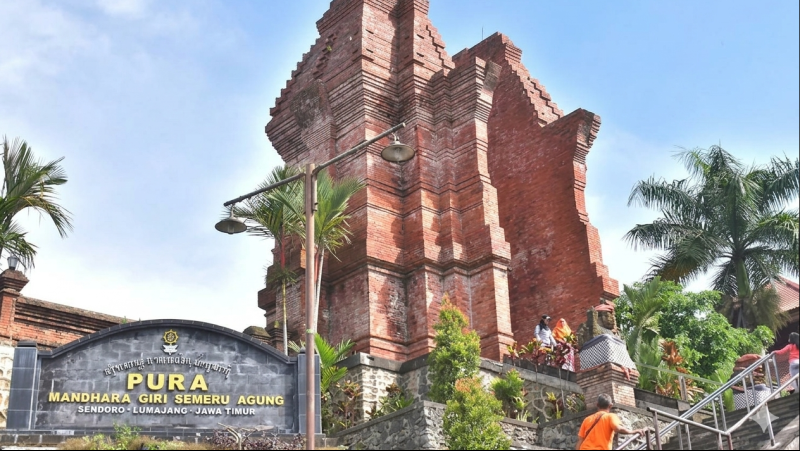
Nestled on the eastern slopes of Mount Semeru in Senduro Village, Lumajang Regency, East Java, Pura Mandara Giri Semeru Agung stands as one of Indonesia's most revered Hindu temples. More than a place of worship, the temple represents a living testament to the nation's rich spiritual heritage, cultural diversity, and enduring commitment to harmony between humanity, nature, and the Divine. As a Pura Kahyangan Jagat, it serves Hindu devotees from across Indonesia while preserving values that transcend generations.
The temple's significance is deeply rooted in Hindu cosmology. According to the ancient Javanese manuscript Tantu Panggelaran, Mount Semeru is believed to be the earthly manifestation of Mount Mahameru, the sacred cosmic mountain transferred from Bharatawarsa (India) to stabilize the island of Java. For Hindus, Mount Semeru is regarded as the spiritual axis of the archipelago and the sacred abode of Hyang Siwa Pasupati, making the establishment of a temple at its foothills a profound expression of reverence toward the Divine and the natural world.
The history of Pura Mandara Giri Semeru Agung is equally inspiring. The aspiration to establish the temple emerged in 1969, however financial limitations and administrative challenges meant that the project required nearly two decades of perseverance before becoming a reality. Through the collective efforts of Hindu communities from Java and Bali, supported by dana punia (religious donations), the temple was finally consecrated in 1992 and officially recognized by the Parisada Hindu Dharma Indonesia (PHDI) as a Pura Kahyangan Jagat, affirming its status as a national Hindu sanctuary.
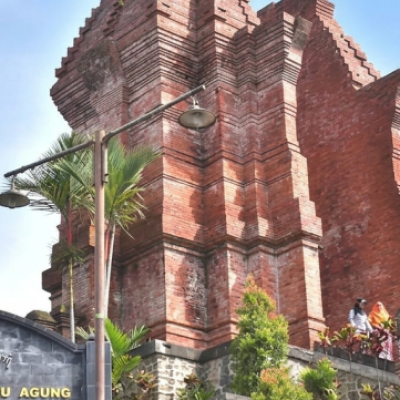
Architecturally, the temple reflects the harmonious integration of Balinese temple traditions and the classical heritage of the Majapahit Kingdom. The extensive use of locally produced red bricks recalls the grandeur of ancient Javanese architecture, while the spatial arrangement follows the traditional Hindu concept of Tri Mandala, consisting of the Jaba Sisi (outer courtyard), Jaba Tengah (middle courtyard), and Utama Mandala (inner sanctuary). At the heart of the complex stands the Padmasana, the principal shrine dedicated to Ida Hyang Widhi Wasa, symbolizing the highest spiritual reality in Hinduism.
Beyond its architectural beauty, the temple embodies the Hindu principle of ecological harmony. Hindu cosmology views mountains as the sacred source of life, where forests, water, and all living beings are interconnected within a continuous natural cycle. Viewed from the perspective of the Directorate General of Hindu Community Guidance, temples located in mountainous regions serve not only as places of worship but also as centers for fostering environmental awareness. Caring for forests, protecting water sources, and preserving ecosystems are understood as expressions of Dharma and devotion to Ida Hyang Widhi Wasa. This perspective reflects the Hindu belief that spiritual practice and environmental stewardship are inseparable.
Pura Mandara Giri Semeru Agung also demonstrates how religious heritage can contribute to social and economic development. Every year, thousands of Hindu devotees visit the temple during major holy days such as Purnama, Tilem, Galungan, Kuningan, and the temple's Pujawali celebration. These pilgrimages generate meaningful economic opportunities for local residents through the growth of small businesses, homestays, food stalls, and cultural tourism services. Significantly, these benefits are enjoyed by communities of diverse religious backgrounds, making the temple an inspiring example of religious harmony and inclusive community development.
Today, Pura Mandara Giri Semeru Agung continues to serve as far more than a sacred place of worship. It is a center for preserving Hindu teachings, safeguarding Indonesia's cultural heritage, promoting environmental responsibility, and strengthening social cohesion. Its enduring legacy demonstrates that faith can inspire not only spiritual devotion but also cultural resilience, ecological consciousness, and shared prosperity.
As one of Indonesia's most significant Hindu temples, Pura Mandara Giri Semeru Agung embodies the universal values of Dharma—devotion to God, compassion for humanity, respect for nature, and responsibility for preserving cultural heritage. These timeless principles continue to guide the Hindu community while contributing to Indonesia's vision of a harmonious, inclusive, and sustainable society.
Editor : I Made Juni Saputra
Photographer : I Gede Dipayana