
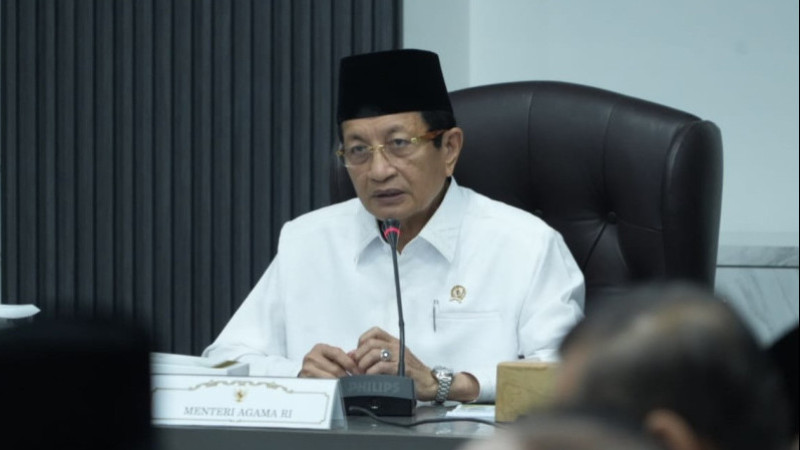
The Minister of Religious Affairs, Nasaruddin Umar has called on all civil servants (ASN) within the Ministry of Religious Affairs to welcome the Work From Home (WFH) policy as part of a transformation toward a more modern and sustainable work culture.
The Minister emphasized that the WFH policy, which will be implemented every Friday, is not merely a change of work location, but part of a major government initiative to build a more adaptive, efficient, and impactful working system.
“WFH is not just about working from home, however it is a new way of working which is more adaptive and efficient, without compromising the quality of services,” said Minister Nasaruddin Umar in Jakarta on Thursday.
The Ministry of Religious Affairs will implement the WFH policy every Friday starting April 10, 2026. This policy follows the introduction of the New Work Culture Transformation on April 1, 2026. It is a strategic step to respond to global dynamics by promoting a more efficient, productive, and digitally based work model.
“No matter where we are, services to the public must remain available, accessible, and well-functioning. Let us utilize technology, strengthen coordination, and pay attention to those who need it most,” the Minister added.
He emphasized that the commitment to public service must not be reduced. On the other hand, with technological support, coordination should become stronger, and service delivery should be more tangible. The Minister also invited all Ministry personnel to see this moment as the beginning of building a new, more balanced and meaningful work rhythm.
“We are building a new rhythm—a way of working that is wiser, more balanced, and more meaningful. From the Office of the Minister of Religious Affairs, I invite all ASN within the Ministry to carry out this transformation together. Let us begin a new way,” he concluded.
Agreeing with the Minister, the Secretary General of the Ministry of Religious Affairs, Kamaruddin Amin, emphasized that the essence of this policy is a more adaptive yet controlled work culture transformation. The policy also serves as a strategic step to reduce energy and mobility costs.
Therefore, Ministry employees are expected to maintain their work rhythm and professionalism. “It must be underlined that WFH does not mean Work From Anywhere. Employees are required to work from home and remain on standby,” Kamaruddin Amin asserted.
Translated by Muhammad Mahmud Alhushori