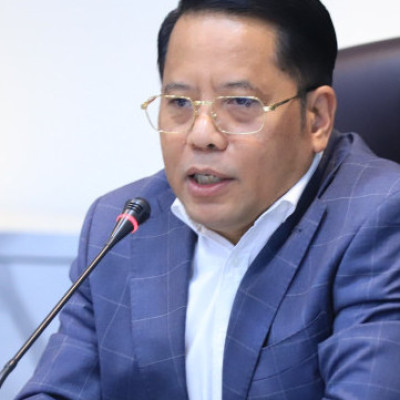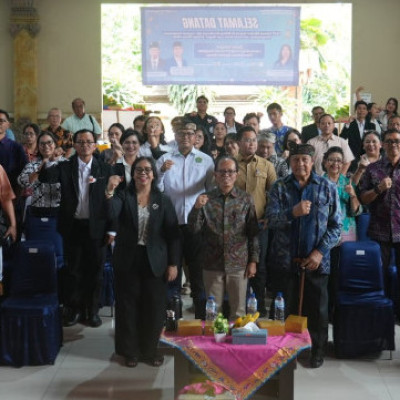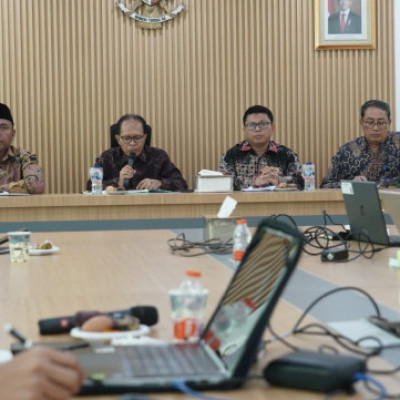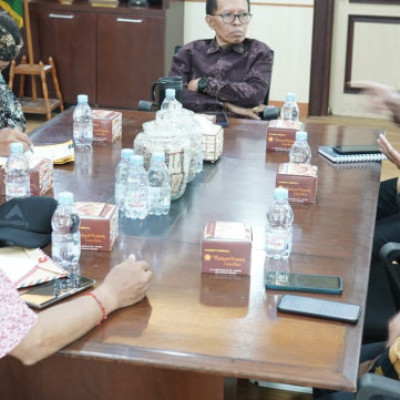

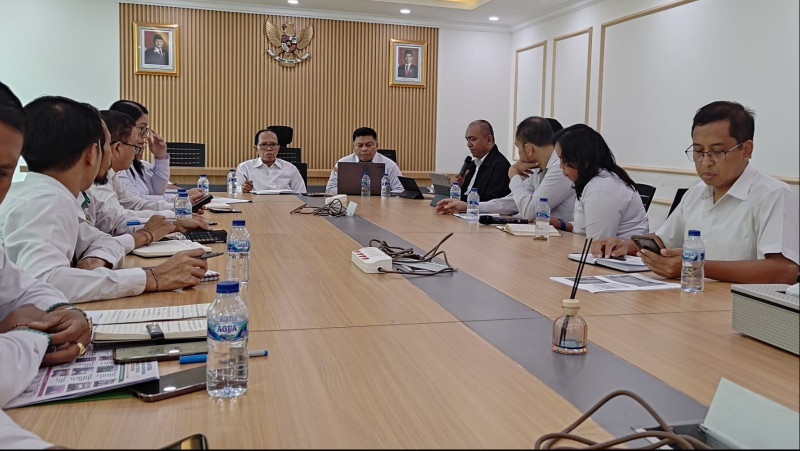
The Directorate General of Hindu Community Guidance continues to advance strategic initiatives aimed at improving the quality of Hindu religious and educational services. This commitment was highlighted during an Executive Meeting led by the Director General of Hindu Community Guidance, Prof. I Nengah Duija, in Jakarta on Monday.
The meeting, attended by echelon II and III officials, administrators, supervisors, and planning functionaries, discussed a range of priority programs that will serve as key areas of focus moving forward. These include eco-theology, Hindu family development, educational data strengthening, and preparations for the implementation of the 16th National Utsawa Dharmagita (UDG) in 2027.
In his remarks, Prof. Duija emphasized that all organizational units must strengthen program governance through the provision of accurate, measurable, and evidence-based data. According to him, the quality of data will determine the effectiveness of policies and programs designed to address the needs of Hindu communities across Indonesia.
“All work units must prepare valid, evidence-based strategic data as the foundation for policymaking and program implementation,” said Prof. Duija.
One of the key issues receiving special attention was the strengthening of eco-theology programs. The Directorate of Hindu Religious Affairs was instructed to develop more concrete initiatives and systematically document environmental conservation activities already undertaken by Hindu communities, including tree planting, wildlife release programs, and other conservation efforts.
Strengthening eco-theology is considered essential not only as an implementation of Hindu teachings on maintaining harmony with nature, but also as a tangible contribution to sustainable development and environmental preservation.
The meeting also highlighted the importance of strengthening the Rumah Bina Keluarga Sukinah (RBKS) program as a key instrument for Hindu family development. The program is viewed as strategically important in fostering family resilience and supporting the development of high-quality future generations in line with the vision of Indonesia Emas 2045.
Director of Hindu Religious Affairs, Ida Bagus Ketut Drana Arimbawa, emphasized the importance of delivering programs that have a direct impact on society. He noted that strengthening RBKS and other family development initiatives should remain a continuous priority.
In the education sector, the Directorate of Hindu Education was tasked with accelerating the consolidation of national data covering state Hindu higher education institutions, academic programs, accreditation status, lecturers, students, Widyalayas, Hindu religious teachers, and various educational assistance programs.
Director of Hindu Education, Prof. I Ketut Sudarsana, reported that several strategic datasets are currently being prepared to support the formulation of more targeted Hindu education policies. He also provided updates on the disbursement of the Teacher Professional Allowance (TPG), Pasraman data collection, and institutional development efforts for Hindu educational institutions in various regions.
In addition to discussing religious and educational programs, the meeting underscored the importance of strengthening community economic empowerment through strategic initiatives. Secretary of the Directorate General of Hindu Community Guidance, Dr. Ida Made Pidada Manuaba, stated that several priority programs have been incorporated into national development planning discussions with the National Development Planning Agency (Bappenas).
Another key agenda item was the preparation for Utsawa Dharmagita 2027. Prof. Duija emphasized the need to begin planning for the national event at an early stage and to involve a broad range of stakeholders in the process.
Prof. Duija explained that UDG should not only serve as a platform for preserving Hindu arts and culture but also generate wider social, economic, and environmental benefits. Therefore, the event is being designed to integrate community economic empowerment, eco-theology initiatives, interfaith dialogue, and the promotion of local culture.
“UDG should become a platform that brings together religious values, culture, fraternity, and community empowerment in a single series of activities that delivers broad benefits,” he emphasized.
The meeting also addressed the importance of documenting Hindu philanthropic activities, which have long been carried out through temples, foundations, faith-based social organizations, and individual initiatives. Various social programs—including humanitarian assistance, healthcare services, educational support, and poverty alleviation efforts—were recognized as important contributions that should be systematically recorded and highlighted.
Strengthening eco-theology, family development, educational quality, and Hindu philanthropy forms part of a broader agenda aimed at responding to contemporary challenges. Effective coordination among organizational units was identified as essential to ensuring that every program delivers meaningful and lasting benefits for both the Hindu community and the nation as a unity.
Editor : I Made Juni Saputra
Photographer : I Gusti Ngurah Sathya Dharma
Contributed and Translated by Muhammad Mahmud Alhushori