
Om Swastyastu. Om Awignamastu Namo Siddham. Om Anobhadrah Kratavo Yantu Vishvatah.
This week’s Mimbar Hindu discusses on The significances of Tarkavada in Hinduism:
Cultivating Critical Thought and Wisdom Among Hindu Youth in Indonesia.
The richness philosophical heritage of Hinduism, the pursuit of truth has always been guided by reason, reflection, and discussion. One of the activities that emphasize these values is Tarkavada, a school of thought that upholds logical inquiry as a means to understand the nature of reality and strengthen faith through reason. In the context of Indonesian Hinduism, particularly in Bali and other Hindu communities, understanding Tarkavada is essential for today’s youth who live amid rapid technological, cultural, and intellectual changes.
The term Tarkavada comes from two Sanskrit words: tarka, meaning “logic” or “reasoning,” and vada, meaning “discussion” or “philosophical system.” Thus, Tarkavada can be interpreted as “the philosophy of logical reasoning.” In the broader scope of Hindu philosophy, Tarkavada is closely related to the Nyaya and Vaisheshika schools, which emphasize logical analysis and rational thinking as pathways toward the discovery of truth (satya).
Tarkavada teaches that faith (sraddha) should not be blind. Instead, it should be supported by understanding (jnana) and reflection (manana). In this sense, Hinduism does not reject questioning; rather, it encourages the use of logic and reason to deepen spiritual understanding. This approach harmonizes intellect with devotion—allowing knowledge to serve as a bridge between human reasoning and divine truth. The activities related to the process of logical thinking reason especially on philosophy.
The Relevance of Tarkavada for Indonesian Hindu Youth
For young Hindus in Indonesia, Tarkavada offers a powerful tool to face the challenges of modern life. In a time where information is abundant but not always accurate, the ability to think critically and analyze knowledge is vital. Tarkavada encourages youth to seek the essence behind appearances, to question with respect, and to find balance between tradition and progress.
Through the spirit of Tarkavada, Hindu youth are reminded that religion is not merely ritualistic but also intellectual. By applying logic and critical inquiry, they can understand the deeper meaning of religious teachings, ethics, and rituals practiced in Bali and across Indonesia. Such understanding builds a faith that is not easily shaken by external influences and helps youth uphold Hindu values in a globalized world.
The significances of Practicing Tarkavada
Debate and discussion play an essential role in deepening our understanding of Hindu teachings. The art of dialogue and reasoning is deeply embedded in our sacred scriptures, particularly in the Upanishads and the Bhagavad Gita, which portray the dialogue between Lord Krishna and Arjuna on the battlefield of Kurukshetra. This illustrates that truth can be discovered through meaningful dialogue.
In fact, discussion and debate are considered duties in the pursuit of knowledge. Through such exchanges, we share wisdom and insights with one another, making it easier to comprehend the essence of our religion.
The practice of Tarkavada provides several significances for personal and communal development:
Strengthening Critical Thinking
Tarkavada trains the mind to analyze arguments, recognize truth, and avoid misconceptions. This intellectual discipline helps young Hindus become thoughtful, wise decision-makers.
Promoting Respectful Dialogue
The vada aspect of Tarkavada emphasizes dialogue and discussion. It teaches youth to engage in conversations respectfully, valuing different perspectives without hostility. This fosters harmony both within the Hindu community and in wider society.
Deepening Spiritual Understanding
By integrating logic with devotion, Tarkavada allows youth to explore the philosophical depth of Hindu teachings. Understanding the reasoning behind rituals and ethics transforms worship into conscious practice.
Building Resilience Against Misinformation
In the digital era, where false narratives spread easily, the analytical mindset of Tarkavada empowers youth to discern truth from illusion—protecting their beliefs and promoting clarity of thought.
Moreover, the study of debate in Nyaya Darshana—the Hindu school of logic—focuses on seeking truth through four means of knowledge (pramana):
Pratyaksha Pramana – direct perception or observation,
Anumana Pramana – inference or reasoning,
Upamana Pramana – analogy or comparison, and
Shabda Pramana – testimony or authoritative scripture.
These four methods guide us toward the discovery of truth and wisdom through reasoned thought and disciplined discussion.
Faith and Dharma as the Foundation
The ultimate goal of Hinduism is to guide individuals toward spiritual and material well-being, ultimately leading to moksha, or liberation. To achieve this, one must live according to dharma — the moral and cosmic order that sustains life.
Faith, or śraddhā, is fundamental in Hinduism, as stated in the Atharva Veda (XII.I.I):
“Truly, Satya (truth), Rta (cosmic order), Diksha (consecration), Tapa (austerity), Brahma (knowledge), and Yajña (sacrifice) uphold the world.”
This verse explains that the universe is sustained by dharma, which consists of these six elements — truth, order, discipline, austerity, knowledge, and sacrifice. Together, they preserve harmony in life.
The core beliefs of Hinduism, known as the Pañca Śraddhā, include:
Belief in Brahman (the Supreme Reality),
Belief in Atman (the soul),
Belief in Karma Phala (the law of cause and effect),
Belief in Punarbhawa (reincarnation), and
Belief in Moksha (liberation).
The Role of Hindu Youth
Hindu youth are the future torchbearers of dharma. They stand at the forefront of spreading and preserving the teachings of Hinduism. Their active role in promoting literacy and religious understanding is essential so that Hindus can deepen their comprehension of rituals and grasp the true meaning behind daily spiritual practices.
Cultivating a spirit of reasoning, discussion, and reflection through Tarkavada, young Hindus can uphold the values of dharma and ensure that the light of truth continues to guide the generations to come.
Tarkavada in the Indonesian Context
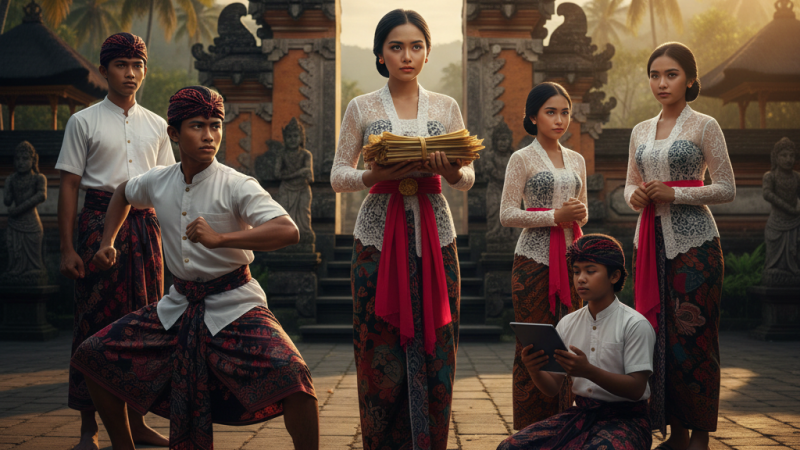
In Indonesia, Hinduism has long embraced philosophical reflection as part of spiritual education. The teachings of tattwa, susila, and upacara—the three foundations of Balinese Hinduism—reflect the same balance between understanding, ethics, and ritual. Tarkavada aligns naturally with this structure, especially within tattwa (philosophy), which encourages inquiry into the nature of life, the universe, and divinity.
Balinese Hindu educators and leaders can integrate Tarkavada into youth learning through discussion forums, philosophical study groups, and classroom dialogues that link ancient wisdom with modern issues. In doing so, Tarkavada becomes not just an academic concept but a living practice that nurtures critical, ethical, and spiritually grounded individuals.
Conclusion
Tarkavada, the philosophy of logical reasoning in Hinduism, serves as a timeless guide for Hindu youth in Indonesia. It reminds them that true faith is not blind acceptance but thoughtful understanding. By embracing the principles of logic, dialogue, and reflection, young Hindus can uphold their traditions while engaging wisely with the modern world. In an era that often values speed over depth, Tarkavada invites youth to pause, reflect, and pursue truth with both heart and mind—ensuring that Hindu values continue to shine through wisdom and reason.
*Komang Triardani (Hindu Priest) – with additional writings
Kontributor: Muhammad Mahmud Alhushori
Editor: Jaya Perdhana
Ilustrator: Jaya Perdhana