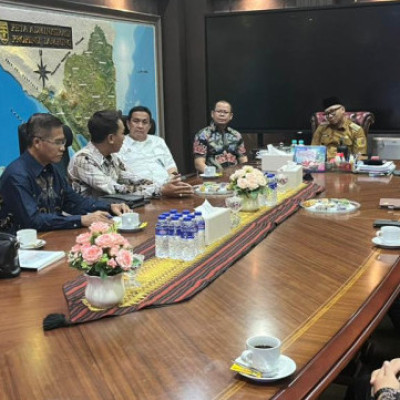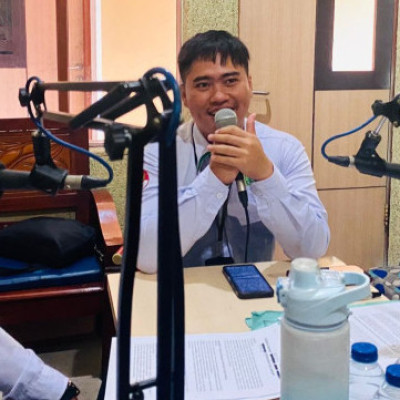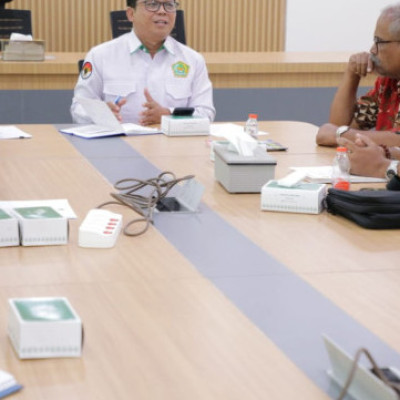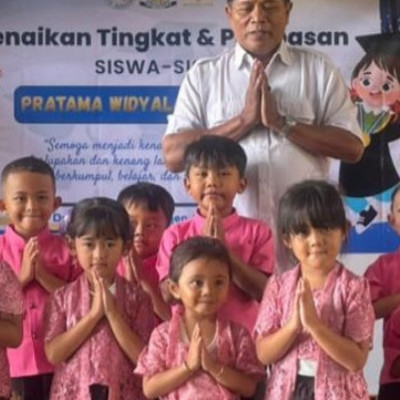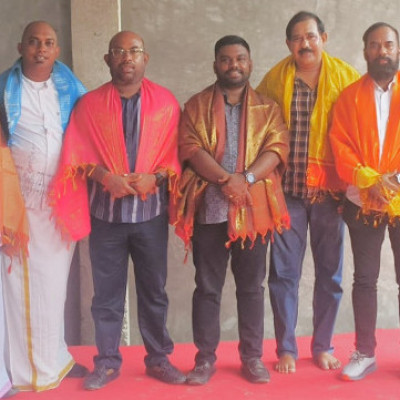

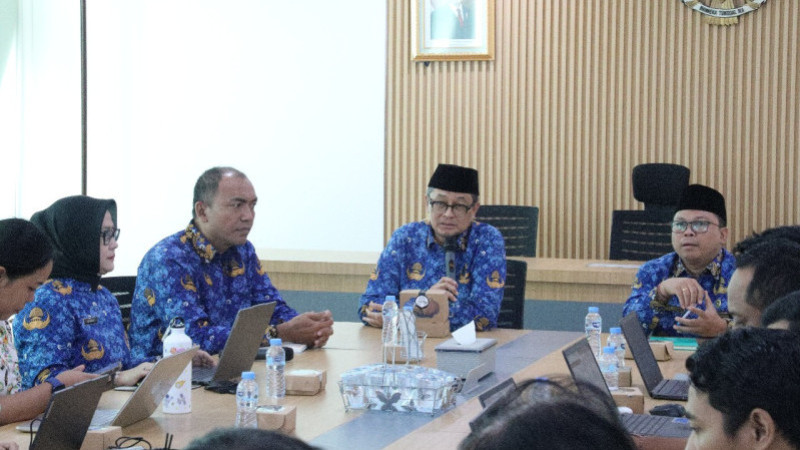
Jakarta (BIMAS HINDU) – The Ministry of Religious Affairs, toward the Bureau of Law and Foreign Cooperation (Biro Hukum dan KLN), along with the Directorate General of Hindu Community Guidance, held a Plenary Meeting on the Draft Ministerial Regulation (RPMA) concerning Amendments to Ministerial Regulation Number 2 of 2024 on the Administration of Widyalaya Education. The meeting took place in the 14th floor building of the Directorate General of Hindu Community Guidance.
The meeting was attended by Head of the Bureau of Legal and International Affairs, Imam Syaukani; officials of the Legal and International Affairs Bureau; Secretary of the Directorate General of Hindu Community Guidance, Dr. Ida Made Pidada Manuaba; Director of Hindu Education, Prof. I Ketut Sudarsana; the legal team of Directorate General of Hindu Community Guidance; and the Hindu Education leading team. The primary agenda was to thoroughly review the draft amendment that will serve as the legal foundation for the administration of Widyalaya education in Indonesia.
Head of the Bureau of Legal and International Affairs, Imam Syaukani, stated that revisions to Ministerial Regulation Number 2 of 2024 are essential because the previous regulation did not yet include provisions on the state recognition (penegerian) of Widyalaya institutions. This has become a strategic concern for the Directorate General of Hindu Community Guidance as efforts are being made to facilitate the transition of privately-owned Widyalaya institutions toward official state recognition, ensuring a clear and sustainable legal framework.
“In the previous regulation, the aspect of state recognition for Widyalaya was not firmly regulated. Therefore, this amendment is essential to ensure legal certainty and clear policy direction for Hindu educational institutions,” said Imam Syaukani.
During the meeting, several articles were highlighted for revision, particularly Articles 9, 15, and 16. Article 15 has been expanded into three separate articles—15A, 15B, and 15C—providing more detailed guidelines on the procedures for state recognition and educational administration.
In Article 15B, the term the head of organizing body has been revised to the chairman of a legal Hindu religious organization, aligning terminology with previous regulations. Article 16 has also been simplified to maintain consistency in language, normative structure, and adherence to regulatory drafting standards.
The discussion also addressed the need for clearer authority over recommendation issuance in the establishment or state recognition process of Widyalaya institutions. The previous diction referring to “recommendation from district/city government and/or provincial government” was considered open to varied interpretation. To avoid ambiguity, the term “recommendation from the provincial head and/or district/city head” (Governor or Major/Regent) has been proposed to ensure clarity in administrative authority.
As a follow-up, the draft regulation amendment will undergo a public hearing before entering the harmonization stage. Both processes may be conducted simultaneously in one location to accelerate regulatory finalization.
This plenary meeting is expected to strengthen the law foundation of Widyalaya management and guiding for a better quality of Hindu education in Indonesia.
Kontributor: Muhammad Mahmud Alhushori
Editor: Jaya Perdhana
Fotografer: Made Juni