
Om Awignam Astu Namo Sidham, Om Sidhirastu Tad Astu Svaha, Om Swastyastu. My respected fellow Hindus, this Dharma discourse addresses the concept of Yadnya.
Hinduism rests on three foundational frameworks known as Tattwa (Philosophy), Susila (Ethics), and Yadnya (Ceremonial). These three are interconnected and form a unified path toward the ultimate goals of Hinduism: Jagadhita (worldly well-being) and Moksha (spiritual liberation). This discourse focuses on the third principle: Yadnya.
Yadnya, in essence, is a sacred act performed sincerely, guided by Dharma, and rooted in the Vedas. It can be understood as worship, reverence, sacrifice, service, virtue, generosity, and wholehearted surrender for the welfare of all and the glory of Ida Sang Hyang Widhi Wasa.
Hindus demonstrate deep religiosity in daily life through practices such as ceremonies, prayers, and offerings. Yadnya is not merely ritualistic but represents a universal law: all beings are bound by it. The Bhagavad Gita emphasizes that Yadnya encompasses both physical offerings and psychological-spiritual devotion. In Adhyaya III, verses 10 and 14, it teaches that creation and sustenance are sustained through Yadnya: from food comes life, from rain comes food, and from Yadnya comes rain.
“Sahayadnyah prajah srstva puro, vaca prajapatih Anena prasavisyadhvam, esha vo‟ stv istha kamandhuk” (In ancient times, Prajapati created humanity with Yadnya and said; by this you will flourish and will become the fulfiller of desires) – Dalam Mantra, 2003:43.
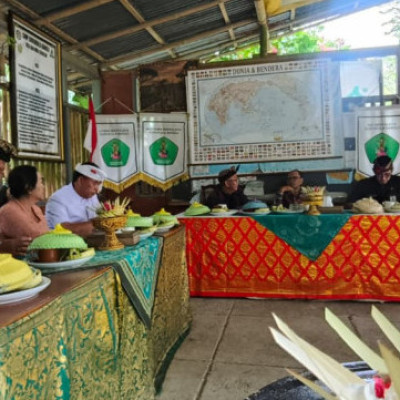
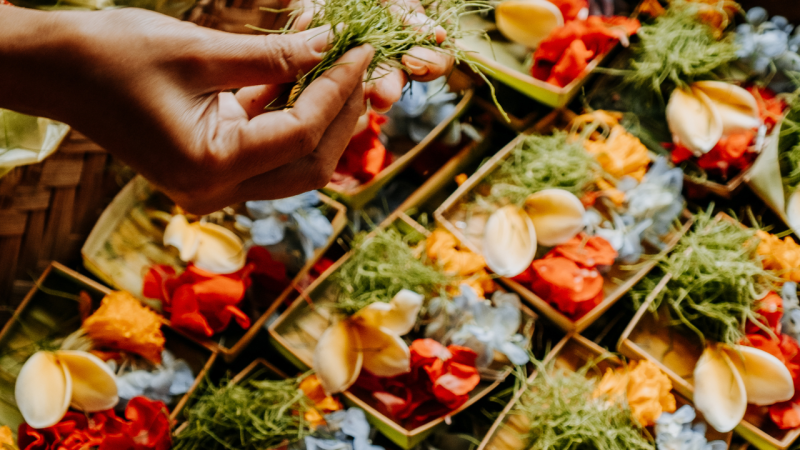
In Bali, Yadnya ceremonies are carried out with communal cooperation and adherence to cultural values. Offerings (bebanten) symbolize not only personal devotion but also the cosmic order (Tri-Buwana – Bhur Loka, Bwah Loka, Swah Loka). They embody harmony between self, God, and the universe.
Moreover, in Mantra, 2003:44 it is mentioned:
“Annad bhavati bhutani, Parjanyad annasambhavah. Yadnyad bhavati parjanyo, yadnyah karmasamudbhavah”( from food comes life, from rain comes food, and from Yadnya comes rain.)
- Forms of Yadnya are diverse:
- Tapa Yadnya (self-control),
- Jnana Yadnya (study and pursuit of spiritual knowledge),
- Yoga Yadnya (union of atma with paramatma through meditation),
- Artha Yadnya (charity),
- Kriya Yadnya (service to those in need), and
- Angga Yadnya (personal sacrifice such as blood donation).
- Sahdu Sanggha (having a group of spiritual practicioners)
True Yadnya must extend beyond ceremonies. It must manifest in daily life through compassion, generosity, and service, thereby fostering the Hindu ideal of Tri Hita Karana – harmony with God, humanity, and nature.
That is today’s Dharma discourse. May Ida Sang Hyang Widhi Wasa forgive any shortcomings. Om Santih, Santih, Santih Om.
Ketut Artaye (Hindu Spiritual Leader)
@M.Mahmud_Alhushori (Penerjemah)