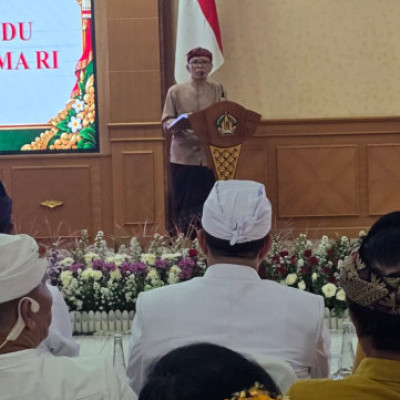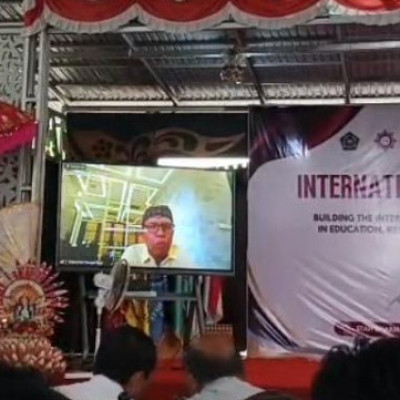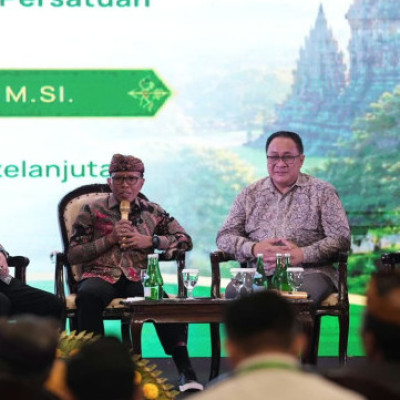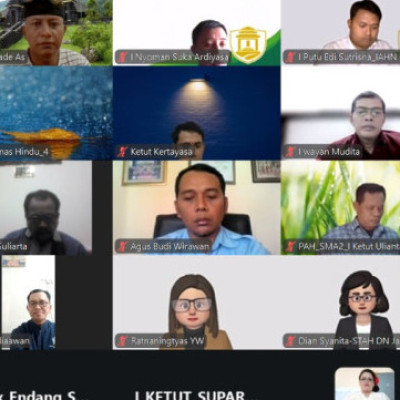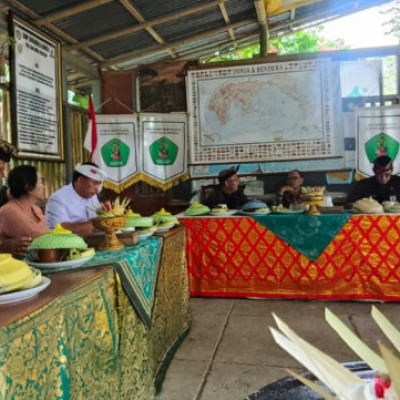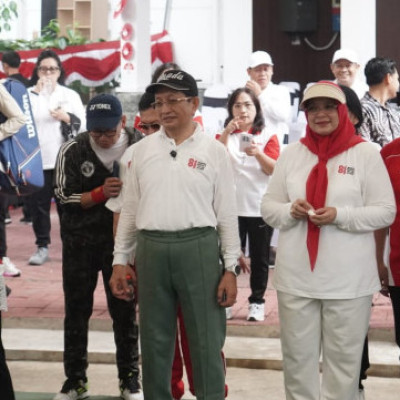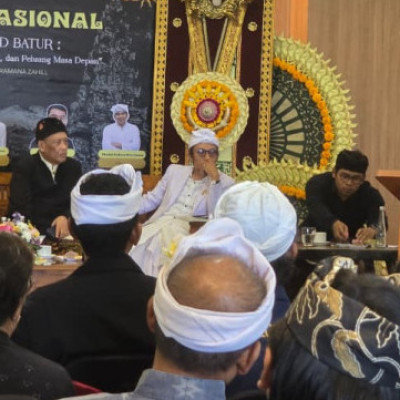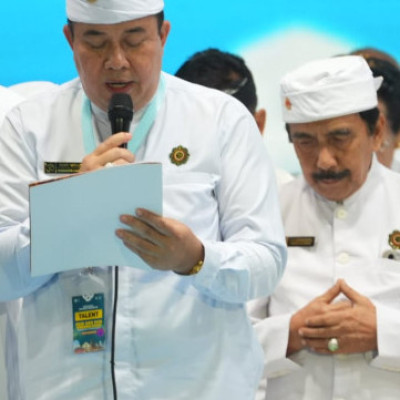
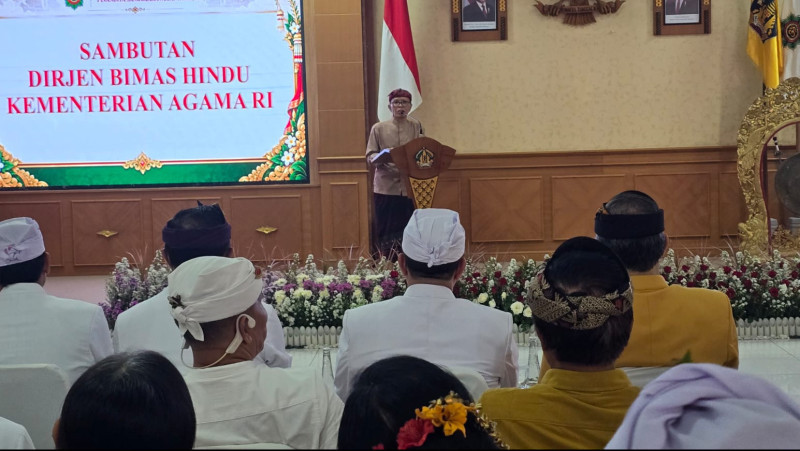
The Director General of Hindu Community Guidance at the Ministry of Religious Affairs, Prof. I Nengah Duija, delivered key guidance and remarks during the opening of the Fourth Mahasabha of Pinandita Sanggraha Nusantara (PSN), held at the Employee Competency Assessment Unit of the Bali Provincial Human Resources Development and Personnel Agency (BKPSDM), on Jalan Hayam Wuruk, Renon, Denpasar, on Thursday (October 15, 2026).
The four-day event, running from October 15 to 18, 2026, aims to determine the organization's strategic policy direction and ensure the continuity of PSN's leadership for the upcoming term. The event was officially opened by Bali Governor Dr. I Wayan Koster, MM, and attended by members of the PSN Central Board and leaders of the Parisada Hindu Dharma Indonesia (PHDI).
In his presentation, titled “Purity in Hindu Priesthood,” (Kesucian dalam Kepinanditaan Hindu) Prof. Duija highlighted the importance of upholding religious values and spiritual purification amid modern civilization. He emphasized that purification in Hindu life is an endless process.
“The cycle of purification in Hindu teachings and life continues uninterrupted, on both small and large scales. Sacred values do not merely serve to fill ritual spaces; rather, every space inherently contains the essence of purity,” Prof. Duija said.
The Director General further explained that a pinandita's inner purity is the fundamental basis for leading religious rituals. He stressed that this purity must be reflected in everyday actions through self-discipline and restraint.
“True purity is attained by those who can free themselves from worldly desires and strive to preserve the purity of their inner selves. Human beings play a central role in maintaining and embodying this purity through their thoughts, words, and actions,” he affirmed.
Beyond spiritual purity, Prof. Duija emphasized the significance of preserving the sanctity of sacred arts against commercialization and performances that misuse or disregard their religious context. He urged pinandita and pemangku to uphold customary norms and established codes of ethics.
“The organization and performance of sacred arts must adhere to five essential pillars: the procession and procedures (process), the performance venue (space), the appropriate occasion (time), the purity of the performers (pregina), and the ritual context. Sacred arts must not be performed outside their religious ceremonial context, as this is essential to preserving their sanctity and dignity,” he emphasized.
Through this guidance, the Fourth PSN Mahasabha is expected to produce organizational policy recommendations that strengthen the role of pemangku and pinandita in fostering harmony among Hindu communities throughout the Indonesian archipelago.
Editor : I Made Juni Saputra
Photographer : I Gede Dipayana