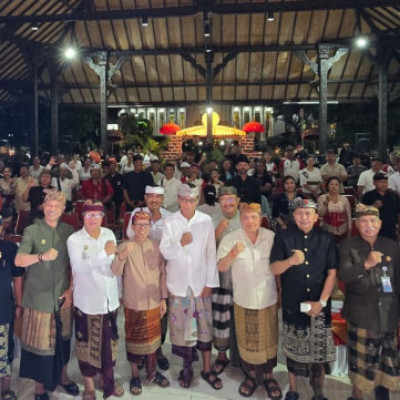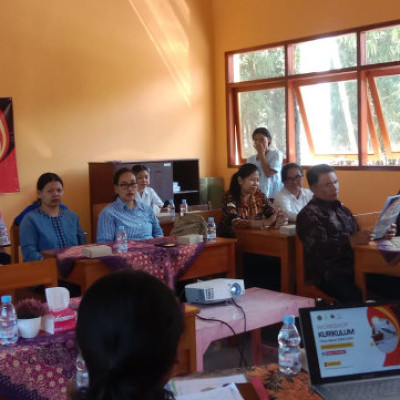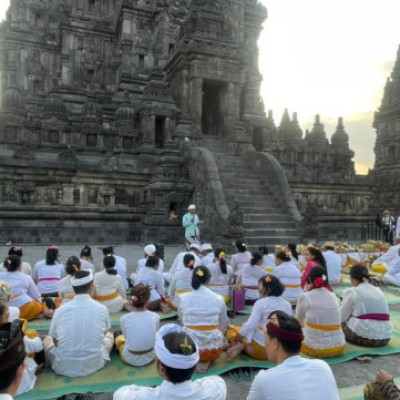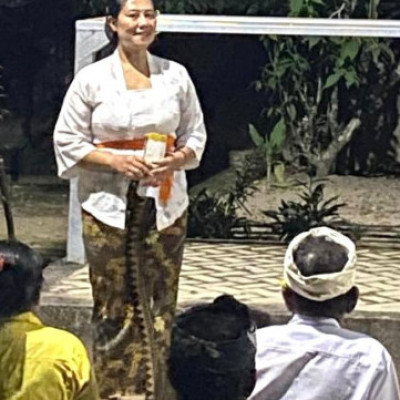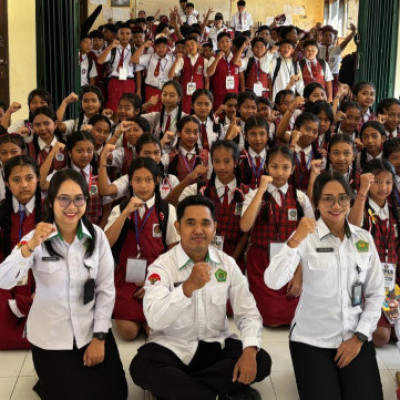

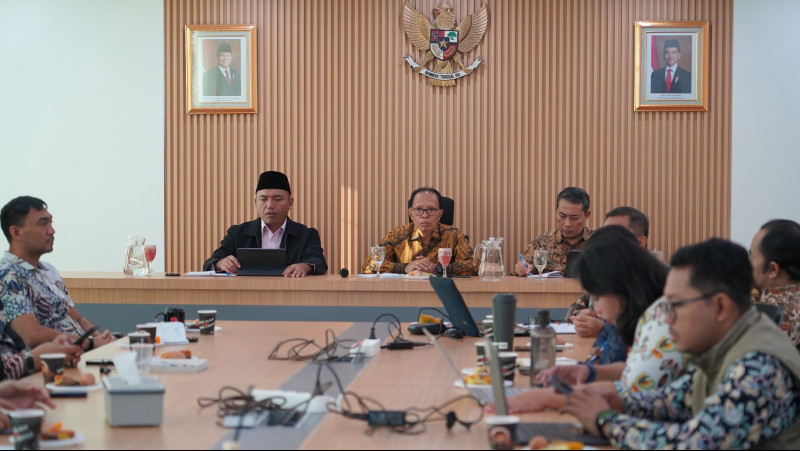
The Directorate General of Hindu Community Guidance at the Ministry of Religious Affairs of the Republic of Indonesia held a hybrid Buda Sanggrahana meeting on Wednesday (May 6, 2026). The event was attended by the Director General of Hindu Community Guidance, Echelon II, III, and IV officials of the Directorate General, senior and junior functional officials, leaders of State Hindu Higher Education Institutions (PTKHN) across Indonesia, the Head of the Regional Office of the Ministry of Religious Affairs in Bali Province, Heads of Regency and Municipal Offices of the Ministry of Religious Affairs throughout Bali, as well as Hindu guidance officials, organizers, and members of Hindu Religious Counselors Working Groups (Pokjaluh) nationwide.
In his remarks, the Director General of Hindu Community Guidance, I Nengah Duija, emphasized the importance of transparent communication with the Hindu community regarding current government policy and budget conditions. He explained that budget limitations are not experienced solely by the Directorate General of Hindu Community Guidance, but also by nearly all ministries and government institutions.
“I ask officers in the regions to communicate these conditions openly to the community. The public should not feel excluded from information, and we must avoid making promises that are still uncertain,” he stressed.
Prof. Duija also linked these conditions to global dynamics that continue to affect national economic policies. Therefore, he urged all regional offices to maintain public trust through accurate and responsible communication.
Moreover, he highlighted the importance of affirmative policies in regions with strong Hindu populations, such as Bali, East Nusa Tenggara, and Papua. He also appreciated the active participation of regional offices of the Ministry of Religious Affairs in the forum, which he described as an important effort to strengthen synergy between the central and regional levels.
Regarding staffing policies, the Director General stated that the government continues to work toward accommodating the needs of teachers and educational personnel, including through the gradual recruitment of additional civil servants (ASN).
Also in the meeting Prof. Duija expressed appreciation for the public relations team of the Directorate General of Hindu Community Guidance, acknowledging its active role in disseminating information and publicizing government programs to the community. He emphasized that public relations serves as the frontline in building a positive institutional image.
He further encouraged regional public relations teams to optimize their functions, particularly in documenting and publishing activities carried out in their respective areas.
“I appreciate the work of the public relations team of the Directorate General of Hindu Community Guidance. Going forward, I hope regional public relations teams can maximize their publication efforts. Every activity should be properly documented and submitted to the central public relations team,” he stated.
Meanwhile, the Director of Hindu Education, I Ketut Sudarsana, presented several strategic issues in the field of education, including the development of State Widyalaya educational institutions in Bali, particularly in Jembrana. He explained that the main challenge currently lies in meeting the need for teachers and educational staff, especially at the secondary education level.
Prof. Sudarsana encouraged all regional offices to immediately map teacher requirements and prepare anticipatory measures, particularly in areas outside Bali that do not yet have Widyalaya educational institutions.
During the meeting, plans for the implementation of the Teacher Professional Education (PPG) program for uncertified Hindu religion teachers were also presented as part of efforts to improve the quality of Hindu education nationwide.
In addition, the Director of Hindu Education announced a policy regarding the use of diplomas beginning in 2026, which will adopt two schemes—printed diplomas and electronic diplomas (e-diplomas)—as part of the transition toward full digitalization in 2027.
The meeting also highlighted the importance of organizing nonformal pasraman institutions as part of strengthening community-based Hindu religious education. The government encourages all nonformal educational institutions to obtain clear legal status in order to receive optimal program support.
Through this Buda Sanggrahana forum, the Directorate General of Hindu Community Guidance hopes to strengthen synergy between central and regional institutions in addressing challenges while ensuring that Hindu religious services and education continue to operate effectively throughout Indonesia.
Editor : I Made Juni Saputra
Photographer : I Gusti Ngurah Sathya Dharma
Contributed and Translated by Muhammad Mahmud Alhushori