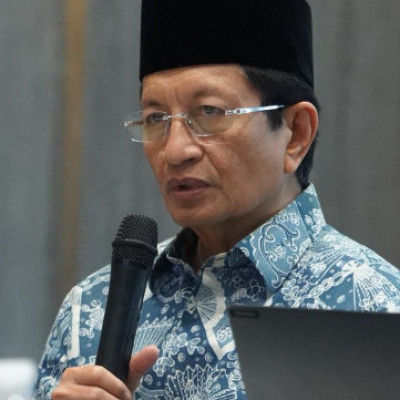


The Minister of Religious Affairs, Nasaruddin Umar emphasized that the Religious Harmony Index should not be viewed merely as a data statistical achievement, but must be understood as a reflection of how deeply religious communities internalize and practice the teachings of their respective faiths. He delivered the statement in an official press release in Jakarta on Tuesday.
The Minister stated that the index number is one of the measurement tools data on religious harmony index, however the real point of strengthening religious harmony life lies in the transformation of attitudes and behaviors among interfaith community. He acknowledged that the current results are not yet fully satisfactory and remain at an early stage of ongoing efforts to improve the quality of religious life in Indonesia.
Nasaruddin Umar explained that the successful development in the religious sector cannot be measured solely through physical indicators or quantitative data. As long as religious communities remain far from the noble values in their religious teachings, the fundamental objectives of religious life cannot be considered fully realized.
He further stated that genuine optimism will emerge only when religious community draw closer to the core teachings of their faiths, as this closeness will have a direct and positive impact on social life. Such impacts include declining crime rates, increased productivity, and the creation of peace and harmony among diverse groups within society.
Furthermore, the Minister assessed that challenges in religious life are not only happen Indonesia, yet it represents a global concern. Therefore, he encouraged Indonesia to position itself as an international reference in promoting a model of religious life that is moderate, inclusive, and harmonious.
As an illustration, the Religious Harmony Index in 2025 reached a score of 77.89—the highest since the survey was first conducted in 2015. The survey was result from the 2025 Religious Harmony Evaluation conducted by the Ministry of Religious Affairs in collaboration with the Center for Education and Community Services at the University of Indonesia.
According to the data from the Ministry of Religious Affairs indicate that between 2015 and 2025, the Religious Harmony Index has fluctuated, as 2025 recorded the highest-level achievement compared to previous years.
In addition, the Ministry of Religious Affairs also released the Religious Piety Index, which recorded a score of 84.61, placing it in the “very high” category. This index is measured across two main dimensions—social and individual—reflecting the quality of religious piety in both communal life and personal religious practice